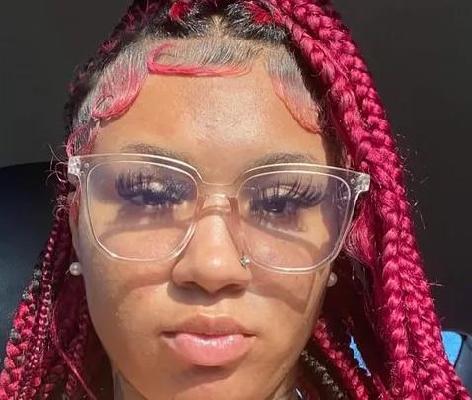
Bles'syn Lightner, 2, a Black female, had just celebrated her birthday four days earlier when the quiet of a late-summer Friday in Melbourne, Florida, shattered. Close to 10:51 p.m. on August 29, 2025, shots tore through a home on Poplar Lane, where the toddler was staying with family. Responding officers found three people wounded inside: two adults in critical condition and the child, Bles'syn Lightner, who was pronounced dead at the scene.
The adults—identified by police as a 54-year-old man and a 48-year-old woman related to the child—were rushed to a hospital as neighbors' porch lights flicked on and sirens converged on the block.
Investigators quickly confirmed the gunfire came into and within the residence, leaving detectives to map bullet paths through domestic spaces that had held ordinary routines only hours earlier. The address—904 Poplar Lane—became the center of a meticulous canvass, with crime scene technicians combing for casings and fragments while detectives moved door to door in the surrounding streets, gathering video and witness accounts. Police emphasized that the three victims were related and that the violence unfolded entirely inside the home, a detail that deepened the shock for a neighborhood unprepared for such intimacy of harm.
By the following days, the Melbourne Police Department's Criminal Investigations Division said it was pursuing “active leads,” a phrase that signaled motion but not yet resolution. Commanders stood before cameras and asked for help, offering up to a $5,000 Crimeline reward for information that could identify whoever was responsible. Detectives would not say whether the gunman had stood outside the house or crossed its threshold, and they held back any theory of motive. The absence of answers hung over Poplar Lane as the sun set and small memorials grew near the curb.
In the weeks that followed, no arrests were announced. Police repeated their appeal for tips and released few additional specifics, noting only that they were working through multiple names and scenarios. The plea for information echoed across local newscasts and community forums, a steady drumbeat intended to reach someone who knew how the path of a bullet had found a child's room on a late August night. The investigation remained open, the reward still posted, and the neighborhood was urged to speak up.
Far from the tape and evidence markers, grief gathered in pews and on fundraising pages. Family and friends shared Bles'syn Lightner's photo and planned a service through a local funeral home, stitching together a farewell for a life measured in two short years. Messages of support described a toddler who was deeply loved, a presence that filled a home now marked by absence. Even as the community mourned, the case file thickened with interviews, warrants, and lab requests—signs of a hunt still underway for the person or persons who turned an ordinary Friday into an irrevocable before-and-after.
The question that threads through every update is the one yet unanswered: who did this, and why? Until an arrest is made, Bles'syn Lightner's name anchors the story—spoken by officers at briefings, printed on flyers, etched into obituaries—while detectives press on, and a city waits for the moment when a suspect is named and led away.