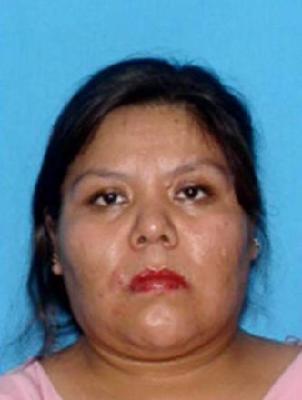
Elizabeth Ann Kenyon, a 23-year-old Caucasian female from Coral Gables, Florida, vanished on March 5, 1984, under deeply troubling circumstances. She was last seen in the parking lot of Coral Gables High School, where she worked as a special education teacher. That afternoon, she spoke briefly with a security guard before driving away in her Chrysler convertible. Kenyon was carrying a duffel bag with workout clothes and a curling iron, but notably left behind her purse. Her roommate initially assumed she had gone to visit her parents in Pompano Beach and did not report her missing until she failed to show up for work the next day.
Six days later, Kenyon’s car was discovered abandoned at Miami International Airport. Authorities found no evidence that she had boarded a flight, and her name did not appear on any passenger lists. Her family insisted that it was completely out of character for the 23-year-old Caucasian woman to leave without notifying anyone. Kenyon was a former fashion model, crowned Orange Bowl Princess in 1982 and a finalist in the Miss Florida pageant. She had also graduated from the University of Miami and coached the cheerleading squad at Coral Gables High School.
A gas station attendant in Coral Gables later reported seeing Kenyon on March 8, three days after her disappearance. He claimed she was speaking with a man driving a Cadillac Eldorado, discussing photography. The man paid for her gas, and they drove off together. The attendant later identified the man as Christopher Wilder, an Australian-American amateur racecar driver and aspiring fashion photographer. Wilder had previously dated the 23-year-old Caucasian female and had even proposed marriage, which she declined due to their significant age difference.
Christopher Wilder quickly became the prime suspect in Kenyon’s disappearance. He had a documented history of sexual violence dating back to his teenage years and had previously been convicted of attempted sexual battery. In 1980, while visiting Australia, he was charged with kidnapping and sexually assaulting two teenage girls but fled back to the United States before standing trial. Wilder was known to lure young women with promises of modeling opportunities, a tactic he had allegedly used with Kenyon and other victims.
When questioned by police, Wilder claimed he had not seen Kenyon in over a month. However, multiple witnesses placed him with her on the day she disappeared, and he appeared to know the location of her abandoned car before that information was made public. Wilder’s connection to other missing women, including Rosario Gonzales and Tammy Leppert, further intensified suspicion. He embarked on a cross-country killing spree shortly after Kenyon’s disappearance, abducting, raping, and murdering multiple young women. His rampage ended in April 1984 when he was killed during a struggle with police in New Hampshire.
Despite the strong