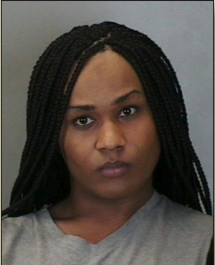
In the spring of 1997, the discovery of a young woman's body in a vacant house in Northwest Washington, D.C., deepened a growing sense of fear within the community. Lateashia Blocker, a 28-year-old Black female, was found on May 8th under the floorboards of a derelict property at 766 Princeton Place NW. The unsettling discovery was made after her family, persistent in their search, urged police to investigate the abandoned building.
The initial examination of the scene and an autopsy
proved inconclusive, leaving the cause of Lateashia's death undetermined. This ambiguity was a source of great pain for her mother, Brenda Blocker, who tirelessly advocated for her daughter, convinced that she had been murdered. Her insistence came as investigators were already looking into a disturbing pattern of deaths of Black women in that same Georgia Avenue neighborhood. The discovery of another woman, Jacqueline Teresa Birch, in the very same vacant house, whose death was ruled a homicide by manual strangulation, lent weight to the concerns of a potential serial predator.
Despite the connections investigators drew between Lateashia's death and at least four other cases involving women in the area, a breakthrough in her specific case remained elusive. The police inquiry into the cluster of deaths intensified, yet no suspects were publicly identified, and no arrests were made in connection with her death. The lack of resolution left a grieving family and a troubled community without answers, her life cut short under mysterious and tragic circumstances that, according to available information, remain unsolved.