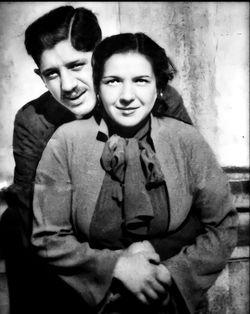
On a late April day in 1969, Shirley Brittingham, a 32-year-old woman who was several months pregnant, moved through a Camden, New Jersey, already strained by poverty and rising crime. She was known within her circle as someone trying to keep her life on track in a city that felt increasingly unsafe, but whatever plans she made for that spring were interrupted in a way no one in her family or neighborhood could have imagined.
When she disappeared, there was no immediate front-page alarm, just another quiet absence in a community used to bad news.
Days later, that absence took on a dreadful clarity. In the basement of an abandoned house on Commerce Street, police came upon a scene that would haunt investigators: two bodies lying amid dust and debris, the air heavy with the smell of decay and the echo of violence. One was Shirley, heavily pregnant, her body showing the marks of a sustained and brutal attack; she had been beaten, shot multiple times, and stabbed, the kind of overkill that suggested rage or a desire to silence her forever. Nearby lay 27-year-old Warren Wells, his body bearing its own signs of savagery, including gunshot wounds and a vicious cut to his throat. Together, in that neglected basement, they became part of a grim pattern emerging across Camden.
News of the discovery filtered through local papers and radio reports, turning the anonymous derelict building into a landmark of fear. Neighbors remembered strange comings and goings, half-heard arguments, figures slipping into vacant properties that dotted the streets. As the medical examiner documented the wounds and timeline of death, it became clear that the killings fit into a larger, terrifying picture: throughout 1969, Camden was being stalked by someone willing to attack in homes, businesses, and abandoned houses alike, leaving behind bodies that spoke of both brutality and a chilling confidence.
Under pressure to find answers, police cast a wide net. Not long after the bodies were found, attention turned to a soldier named William McDaniels, 29 years old and reportedly absent without leave from the Army. Acting on a tip, officers picked him up in Lakewood and brought him back to face questioning about the double homicide. He was charged in connection with the deaths of Shirley and Warren and held on substantial bail, his name briefly tied to the horror in the Commerce Street basement. For a short time, it seemed possible that the case might close on the image of a troubled serviceman who had drifted into violence far from the discipline of his post.
But the sense of resolution didn't last. As detectives dug deeper, inconsistencies emerged and evidence failed to firmly anchor McDaniels to the crime. Within days, he was released and ultimately cleared as a suspect, leaving investigators back at the start: two slaughtered victims, no reliable witnesses, and a city feeling increasingly hunted. The murders of Shirley Brittingham and Warren Wells remained part of a frightening cluster of unsolved killings, each new body reinforcing the idea that someone in Camden was killing with impunity.
The turning point came months later, on September 11, 1969, when police arrested a junkyard laborer named Leroy Snyder after the brutal slaying of shopkeeper Gertrude Friedman. A search of his home turned up items tying him to Friedman's murder, and as detectives questioned him, the scope of his crimes widened. In time, Snyder was linked to seven killings in Camden, including the murders of Shirley and Warren in the abandoned Commerce Street house. Faced with mounting evidence, he offered detailed admissions that matched facts investigators had not released publicly. By the summer of 1970, he was indicted in a string of slayings that had terrorized the city and subsequently entered pleas that spared him a death sentence but consigned him to multiple life terms in prison. For Camden, those court proceedings provided a measure of legal closure, yet for the families of Shirley Brittingham and the child she never got to meet, the memory of that basement and the slow arc from disappearance to arrest remained an unhealed wound, a reminder of how abruptly an ordinary life could be swallowed by violence.