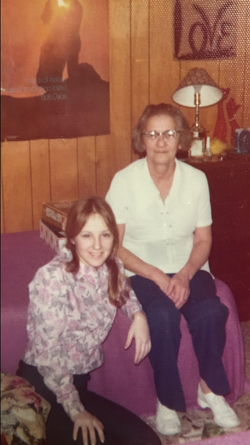
Edith Cook, 98, was a White woman living at the Alpine Manor Nursing Home in Walker, Michigan, when she died during a stretch of nights that later came to be remembered with dread. In the quiet routines of a care facility—dim hallway lights, soft voices at nurse stations, doors cracked open for checks—her passing initially blended into what people expected from a place filled with frailty and long illness: another death that seemed, at first glance, to be natural.
But behind the ordinary rhythms of the home, investigators would later come to believe something far darker had been happening. Authorities focused on two staff members—Catherine May Wood and Gwendolyn Gail Graham—who, according to later testimony and reporting, used their access to vulnerable residents to kill for thrill and for the glue of secrecy between them. The method described was intimate and hard to detect: smothering, often leaving little that would force an immediate reckoning, especially when residents already suffered severe medical decline.
The case did not erupt into public view right away. The deaths at Alpine Manor were clouded by how easily the end of a life can be explained away in a nursing home, and by the grim reality that some kinds of homicide—especially suffocation—may leave scant physical proof. The investigation gained momentum in 1988, after Wood’s ex-husband went to police with what he knew, and Walker detectives began re-examining the pattern of losses at the facility. Bodies were exhumed, and the police chief publicly described the matter as a complex investigation that could involve multiple suffocation deaths, while also indicating there did not appear to be other suspects beyond the two women at the center of the inquiry.
Arrests followed in early December 1988. Wood was arraigned on open-murder charges tied to two deaths, including Cook’s, while Graham was taken into custody in Tyler, Texas, after leaving Michigan. Reporting at the time emphasized how unusual the case was—how much depended on statements from witnesses and former employees, and how investigators, guarding their evidence, hinted at a motive they believed they understood but were not ready to say aloud.
When the case reached court, the story that emerged centered heavily on Wood’s cooperation. Wood’s charges were reduced through a plea agreement that positioned her as an accomplice and witness, while Graham went to trial facing the full weight of five killings. Despite the lack of definitive physical evidence—a challenge that haunted the entire case—the jury ultimately convicted Graham of the murders and conspiracy, and she received multiple life sentences. Wood was convicted of second-degree murder and conspiracy, receiving a lengthy prison term that nevertheless left the possibility of parole years later.
Decades on, the case continued to reverberate for the families of the dead. As Wood neared release, relatives of victims fought to keep her incarcerated, arguing that the harm done inside Alpine Manor could not be answered by time served. Reporting around her eventual release described continuing fear and fury—an insistence that what happened in those rooms was not an abstract horror story, but a betrayal carried out by people paid to care, and suffered by women who could not fight back.