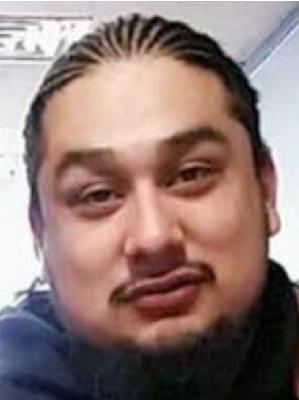
Steven Crockett, a 19-year-old male, tragically lost his life on October 23, 1982. His body was discovered in a cornfield outside Kankakee, Illinois, approximately 40 miles south of Chicago and 15 miles east of the Indiana state line. Crockett was one of the victims of Larry Eyler, a notorious serial killer known as 'The Highway Killer,' who was responsible for the murders of at least 21 young men and boys between 1982 and 1984.
Eyler targeted individuals near interstate highways, earning his grim moniker due to the locations where his victims were found.
Crockett's murder was particularly brutal. He was stabbed multiple times before being discarded in the rural field. His death initially did not raise alarms outside of Kankakee County, as authorities were unaware of the broader pattern of killings that would later be attributed to Eyler. Over time, investigators began to connect Crockett's murder to a series of similar homicides occurring across Illinois and Indiana. The FBI's National Center for Analysis of Violent Crime had not yet computerized records of unsolved murders, making it difficult for law enforcement agencies in different jurisdictions to recognize the connections between cases.
Larry Eyler was eventually apprehended and convicted for multiple murders, including the 1984 kidnapping and murder of 16-year-old Daniel Bridges. He was sentenced to death by lethal injection in Illinois and received a separate 60-year prison sentence in Indiana. Before his death in 1994 due to AIDS-related complications, Eyler confessed to numerous additional murders, including Crockett's, through his defense attorney. His confessions provided closure to many families but also revealed the extent of his crimes, which had gone largely unnoticed for years.
The investigation into Crockett's murder was part of a larger effort to track down the Highway Killer. Authorities in Illinois and Indiana worked together to piece together evidence from multiple crime scenes. Despite the mounting evidence, Eyler continued his killing spree until his arrest in 1984. His modus operandi involved targeting young men, often those engaged in prostitution or hitchhiking, and brutally stabbing them before disposing of their bodies in remote locations. Crockett, like many of Eyler's victims, was found with his pants partially removed, a disturbing signature of the killer's crimes.
Eyler's eventual conviction and confession shed light on the dangers faced by young men in the Midwest during the early 1980s. His crimes left a lasting impact on law enforcement practices, leading to improved methods for tracking serial offenders across state lines. Crockett's murder, though initially overlooked in the broader scope of criminal investigations, became a crucial piece in understanding the full extent of Eyler's reign of terror.