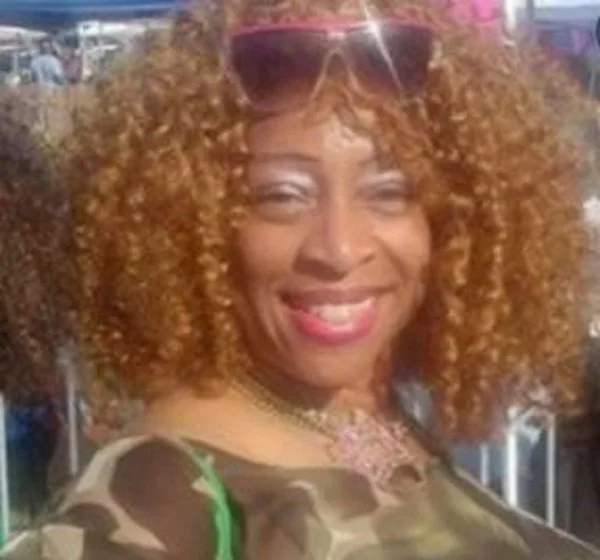
Angela “Angel” Shatteen, a 36-year-old Black woman, was found dead on April 3, 1995, inside an abandoned house at 5043 South Carpenter Street on Chicago’s South Side. A group of schoolchildren discovered her body amid debris in the attic. She was lying on a mattress beneath a blanket, partially unclothed, with a white electrical cord wrapped around her neck. Investigators documented bruising to her forehead and left eye as well as injuries around her mouth.
The medical examiner determined that Shatteen had been strangled and ruled her death a homicide. Subsequent reporting also identified her as pregnant at the time of her death.
The autopsy showed evidence of both manual and ligature strangulation. There were abrasions and ligature marks around Shatteen’s neck, along with internal hemorrhaging and tearing of the neck muscles. Scrapes of skin were found on the electrical cord, evidence that was considered consistent with an attempt to pull the ligature away. Petechial hemorrhaging was also found in her eyes. Toxicology testing detected cocaine and cocaine metabolites in her blood, while forensic investigators collected oral, vaginal and rectal swabs as part of the homicide investigation.
For years, Shatteen’s killing remained part of a disturbing series of murders involving women in Chicago’s Englewood and New City areas. Forensic testing recovered male DNA from Shatteen, but investigators initially had no identified suspect whose profile could be compared with it. The same broader investigation eventually involved the Chicago Police Department, the FBI and a task force examining a pattern of killings in which evidence indicated that several victims had been attacked by the same man.
The investigation eventually centered on Andre Crawford. Information obtained through repeated interviews in the community led police toward Crawford, and investigators found that periods when he was incarcerated appeared to coincide with interruptions in the series of murders. Crawford was apprehended on January 28, 2000. Authorities obtained his DNA, and comparison testing connected him to evidence recovered in multiple cases, including Shatteen’s. In Shatteen’s case, an Illinois State Police forensic scientist testified that Crawford’s DNA profile matched the male profile obtained from her vaginal swab.
After being taken into custody, Crawford gave investigators extensive videotaped statements about the killings. In his statement concerning Shatteen, he said he had known her for approximately two or three years and knew her by the name “Angel.” Crawford said the two encountered one another near West 51st and South Carpenter streets in early April 1995 and went together into an abandoned house near West 50th Street and Carpenter. They entered from an alley and made their way to the attic.
According to Crawford’s recorded confession, an argument developed after Shatteen asked him for cocaine. Crawford admitted that he began choking her with his hands. He said she struggled and attempted to move away from him, at which point he found an electrical cord and wrapped it around her neck. Crawford admitted tightening the cord around Shatteen while pressing his knee against the back of her neck and continuing until she lost consciousness. His description closely corresponded with the physical evidence documented by the medical examiner, including the cord around her neck and the signs of both manual and ligature strangulation.
Crawford further admitted sexually assaulting Shatteen after strangling her. He said he then took her shoes and left the abandoned building, discarding the shoes separately while walking through the neighborhood. Crawford told investigators that he later returned to the house, sexually assaulted Shatteen again, and ultimately placed clothing and debris over her body in an apparent effort to conceal it. The forensic evidence recovered from Shatteen provided independent physical evidence connecting Crawford to the crime.
Crawford’s arrest exposed Shatteen’s death as part of a much larger series of killings. When police announced his arrest in January 2000, authorities initially charged him with 10 counts of first-degree murder, 11 counts of aggravated criminal sexual assault and one count of attempted murder. Crawford confessed to murders already connected through forensic evidence and also described additional killings investigators had not previously grouped with the series. The prosecution subsequently expanded the case, and Shatteen’s killing was formally prosecuted under Cook County case number 00 CR 5464. Crawford faced three first-degree murder counts specifically relating to her death.
Nearly a decade passed between Crawford’s arrest and his trial. On December 10, 2009, a Cook County jury found him guilty in the combined prosecution involving the murders of 11 women and the attempted murder of a surviving victim. The case included Shatteen’s murder as well as the killings of other women tied to Crawford through DNA evidence, his recorded statements and other evidence. Jurors heard Crawford’s videotaped confession concerning Shatteen and testimony explaining the forensic DNA comparison that connected him to evidence recovered from her body.
The jury subsequently found Crawford eligible for the death penalty but declined to impose it. The court sentenced him to natural life imprisonment for the murders, with additional 30-year prison terms imposed for aggravated criminal sexual assault convictions and the attempted murder of the surviving victim. In Shatteen’s case, the multiple murder counts were merged into a single first-degree murder conviction for sentencing purposes. Crawford appealed his convictions, challenging several aspects of the trial and DNA evidence, but the Illinois Appellate Court affirmed the judgment in December 2013.
The identification and conviction of Andre Crawford finally provided a legal resolution to a homicide that had remained unsolved for years. What began with the discovery of Angela Shatteen in the attic of an abandoned South Carpenter Street house eventually became one piece of a far broader serial-murder investigation. DNA preserved from her case, combined with the later investigation of Crawford and his own detailed confession, ultimately established the evidence that led prosecutors to charge and convict him for her murder.