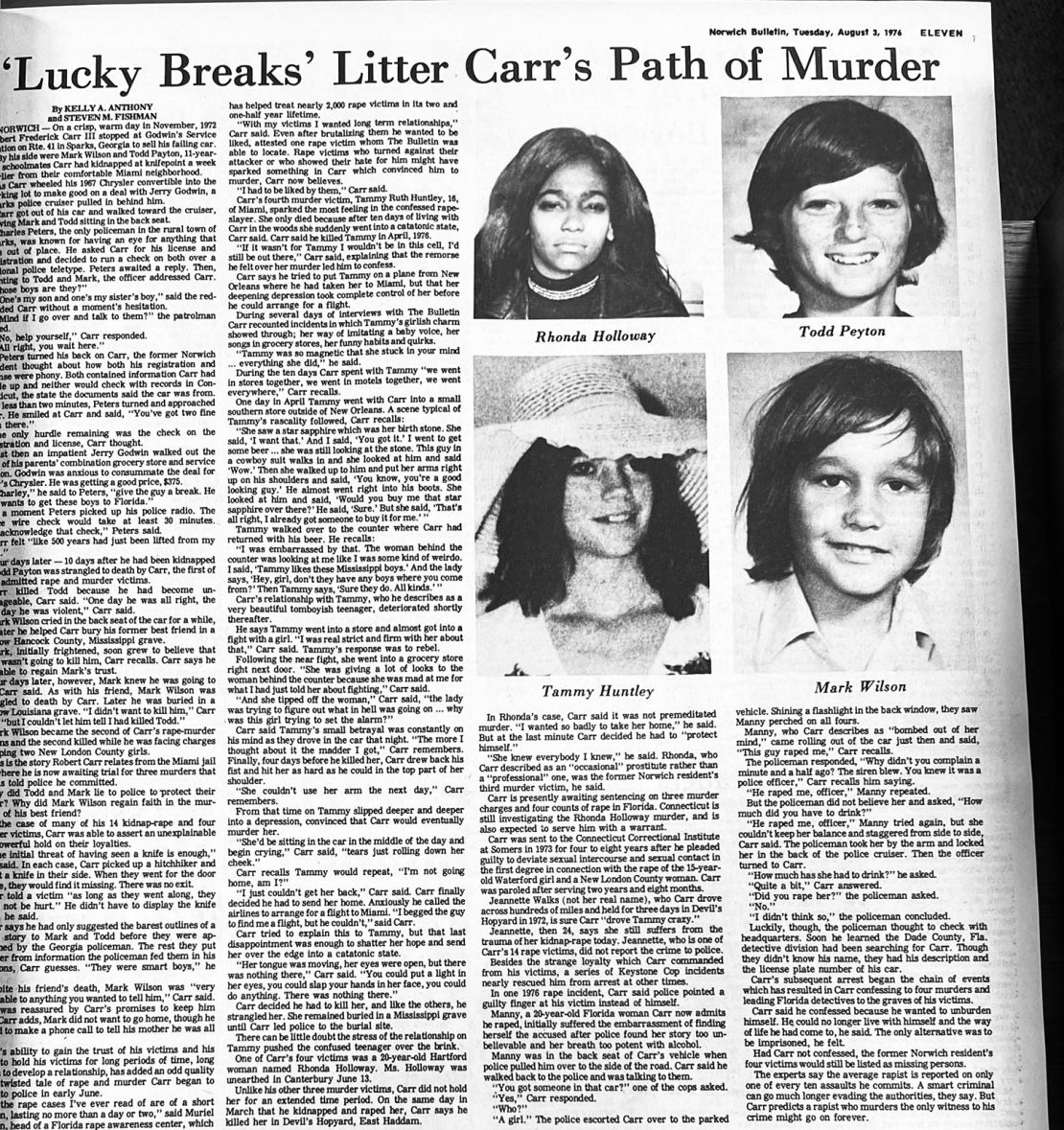
In the quiet community of Norwich, Connecticut, the spring of 1976 was shattered by a brutal act of violence that claimed the life of 21-year-old Rhonda Holloway. On March 8, 1976, the young woman's life was cut short, leaving a lasting scar on the community and a family to grieve an unimaginable loss. The details of her death would later unravel to reveal a chilling connection to a predator who roamed the country, preying on the unsuspecting.
The investigation into Rhonda Holloway's murder led authorities to a man named Robert Frederick Carr III. Carr, a serial killer with a history of violent crimes, was already on parole for rape at the time he crossed paths with Holloway. His method was terrifyingly consistent; he targeted young people, often hitchhikers, subjecting them to abduction, sexual assault, and ultimately, murder. Rhonda Holloway tragically became one of his victims. After killing her, Carr buried her body in a rural area of Connecticut, a location he would later reveal to investigators.
The full scope of Carr's heinous crime spree came to light following his arrest on May 30, 1976. The arrest was not directly for Holloway's murder, but rather after a Metro police officer witnessed him in the act of raping a hitchhiker at knifepoint. Once in custody, Carr began to confess to a string of murders that spanned from 1972 to 1976, including the killing of Rhonda Holloway. He provided detailed accounts of his crimes and led law enforcement to the burial sites of his victims. For his multitude of crimes, which included multiple counts of first-degree murder and sexual battery, Robert Frederick Carr III was sentenced to life in prison. He remained incarcerated until his death in 2007.