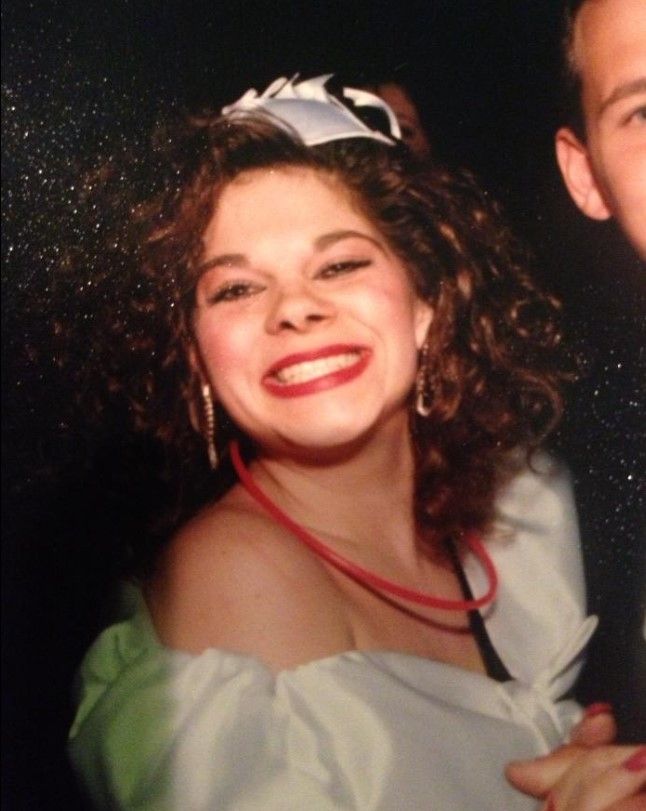
Nathalie Brown was a 19-year-old female from Long Island, New York, whose life became entangled with an Argentine immigrant named Ricardo Silvio Caputo after a chance routine at a bank. He was cashing paychecks at the Marine Midland Bank branch where she worked, and what began as familiarity hardened into a relationship that, at least on the surface, was moving toward marriage.
Behind that momentum, friends later said she wanted out—she wanted to date other people, to reclaim a future that suddenly felt too small and too controlled.
Late on the night of July 31, 1971, the story snapped into something far darker. A call went to Nassau County police directing them to a home in Flower Hill—her parents’ house—where officers arrived to find her dead from multiple knife wounds. Accounts of the scene describe a kitchen knife and a man who did not flee into the shadows, but remained close enough to be taken into custody, with a blunt admission that he had killed his girlfriend. The violence, the intimacy of the setting, and the immediacy of the confession made the first hours of the case feel deceptively straightforward, as though the legal system would move cleanly from arrest to courtroom and then to a final, public accounting.
That clean line never came. After his arrest, Caputo was found mentally incompetent to stand trial, and the prosecution’s path stalled as he was confined to the Manhattan Psychiatric Center on Wards Island. For Nathalie’s family, the case did not simply pause—it drifted into a strange limbo where the person accused of killing her was not being tried, and where the future depended on psychiatric determinations as much as on evidence. In 1974, he escaped from custody, turning the unresolved case into a long-running absence: a homicide without a verdict, and a suspect who slipped away into years of false names and distance.
Decades later, the man who vanished returned to New York and surrendered to police, setting off a new wave of legal action tied back to the Flower Hill killing. Nassau County prosecutors sought to revive what time and escape had interrupted, and he again faced accountability for Nathalie’s death. The case ultimately ended not with a full trial, but with a guilty plea to a reduced charge—first-degree manslaughter—and a state-prison sentence reported as ranging between eight and 25 years. In the public record of this case, Caputo is the central and consistent suspect, the one arrested in the wake of the killing, the one later pursued after escape, and the one who eventually resolved the charge through a plea rather than a jury’s verdict.
The later chapters of Caputo’s criminal proceedings extended beyond Nassau County, tied to other killings attributed to him in the years after he fled. Those cases influenced how authorities and the public understood the Flower Hill homicide: not as an isolated act of sudden rage, but as the opening wound in a wider trail of violence. He died in prison in 1997, closing the possibility of any further courtroom reckoning with him, but leaving Nathalie Brown’s death recorded as the first known victim in the sequence that ultimately defined him.