David Gilbert, a 26-year-old man from Tulsa, Oklahoma, was shot to death on January 23, 2007, during a grim twenty-four hours in which the city saw four homicides and detectives rushed from one crime scene to the next. Police found him in north Tulsa, one of two men killed by gunfire in close proximity of both time and location, with investigators noting that he and another victim, 30-year-old Christopher Moderow, had each been shot in the head at scenes only blocks apart along East Haskell and
East Independence.
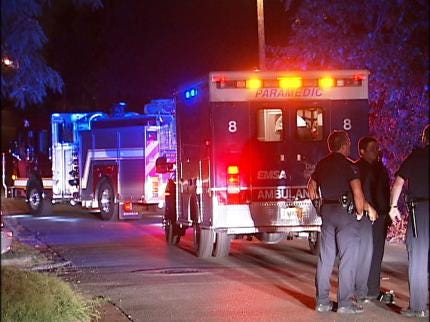
In the immediate aftermath, Gilbert's killing was treated as part of a puzzling cluster of violence. Patrol cars and crime-scene tape marked off stretches of neighborhood streets while overworked detectives tried to piece together who had opened fire and why. Publicly, police acknowledged the likelihood that the two shootings were related, but at that early stage they could say little beyond the basic facts: two men, both young, both shot, both found within hours of each other in a city already on edge from a rising homicide count that winter.
As the investigation unfolded, Gilbert's death began to be linked by witnesses and later reporting to a young man already feared in the neighborhood: 19-year-old Joshua Julius Anderson. Accounts gathered later describe an argument or altercation earlier that day between Gilbert and Anderson at a local store, an encounter that allegedly left Anderson angry and humiliated. According to those witnesses, Anderson sought him out again and shot him in what was described as an act of revenge, turning a simmering dispute into a sudden execution-style killing.
Gilbert's homicide did not stand alone. In the months bracketing his death, Anderson was carrying out what would later be recognized as a short but devastating killing spree in north Tulsa. Beginning in November 2006 with the shotgun killing of Evaristo Tovias Jr., and continuing through the January 23, 2007 shooting of Moderow during a drug-related confrontation, Anderson was blamed for a series of murders in the same troubled pocket of the city. Just days after Gilbert was slain, Anderson's violence culminated in the torture and murder of Herbert Hobbs and his mother Rosemary, a crime so brutal it shocked even seasoned investigators. He was arrested that same day on an outstanding rape charge, and once in custody he confessed in detail to four homicides tied to the spree.
Despite the way witnesses and later true-crime accounts fold Gilbert's killing into the narrative of Anderson's rampage, the legal trail stops short. Reports describe people who claimed to have seen Anderson shoot Gilbert, and multiple retrospectives now list Gilbert as a likely fifth victim of the same gunman. Yet prosecutors never filed a murder charge for this case. The evidence, they concluded, was too thin to survive in court: no physical proof strong enough to secure a conviction, no ironclad witness testimony that could withstand cross-examination. Anderson ultimately received multiple life sentences for four other murders, but Gilbert's name does not appear on the charging documents that put him away.
That gap leaves Gilbert's death in an uneasy place, suspended between community memory and courtroom reality. On paper, his case remains officially unresolved, even as many in Tulsa's northside quietly accept the idea that he died at the hands of the same man who turned their neighborhood into a killing ground over the course of a few months. The night he was found, one more body among a series of crime scenes straining police resources, marked the end of his story but not of the questions that still linger: how a minor confrontation spiraled into fatal violence, why the evidence never rose to the level of a charge, and what justice looks like when the man most widely believed to be responsible is already locked away for life, while one victim's murder is left without a formal resolution.