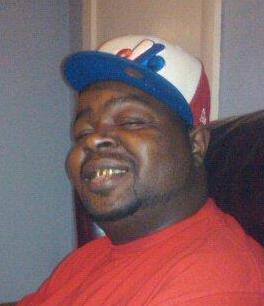
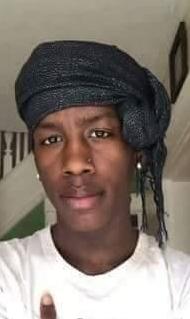
Gregory Lamarr Hudson was a 20-year-old Black man who was killed in St. Louis, Missouri, on January 27, 2010, in a homicide connected to the 4200 block of Margaretta Avenue. That date sits like a hard marker in time—one of those days that doesn’t just pass, but divides everything into before and after for the people who loved him.
There are tragedies that explode across headlines, and then there are the ones that seem to fall into a quieter kind of darkness, where details never fully surface for the public to hold onto. Hudson’s death is remembered in the starkest terms available: a life taken, a location tied to it, and a case that did not come with a widely circulated public narrative. The online record of his killing points to an absence—no readily available news account attached—leaving only the bare outline where a fuller story should be.
That lack of public detail doesn’t soften anything. If anything, it makes the loss feel sharper, because it forces you to imagine the unanswered questions that must have followed from that night. What did he do earlier that day? Who last saw him? What moments led up to the violence? Those are the kinds of questions that families and friends carry when a life is stolen and the world outside their grief offers little clarity in return.
What is known from the information available is that the case has been listed as unsolved. No suspect is publicly identified in the material tied to the record, and there is no indication of arrests, charges, trials, convictions, or any courtroom resolution connected to his death. In cases like this, the silence can feel like a second wound—an open space where accountability should be, where an explanation should be, where justice should arrive and instead keeps postponing itself.
And yet a person is never just a line in a record. Even when the public-facing facts are thin, the weight of the loss is heavy and human. A death like Hudson’s leaves a ripple that spreads through a family, a neighborhood, and a city—through the people who remember his voice, his habits, his laughter, the plans he hadn’t had time to finish making. When a homicide remains unresolved, it doesn’t simply remain “open” in a technical sense; it stays open in the hearts of everyone who expected to grow older alongside him.
In the end, the story that can be told from what’s provided is painfully simple: Gregory Lamarr Hudson was killed, and the public record does not show a clear path to who did it or why. That simplicity is not peace—it’s a blank space where truth belongs. It’s the kind of case that asks to be remembered precisely because it’s easy for the world to move on, while the people closest to him never get to.