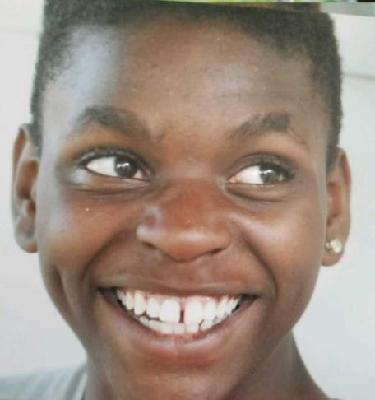
Marcel T. Cornell was a 19-year-old Black male from St. Louis, Missouri, whose life ended too soon. The details of exactly when and how it happened aren’t included in the information available here, and that absence leaves a hollow space where the story should be—one of those painful gaps that can feel even louder than the facts. What remains certain is that someone was loved, someone was known by name, and someone is gone.
In St. Louis, a city stitched together by tight neighborhoods and lifelong connections, a death at nineteen doesn’t just stop one heartbeat—it sends shockwaves through everyone who knew him. It changes the way a family moves through ordinary days. It rewrites routines in an instant: a chair that stays empty, a phone that never buzzes again with his name, a laugh that becomes something people search for in old memories. A young man’s death becomes a permanent before-and-after, marked by the quiet question that never fully rests: how could this have happened, and why did it have to be him?
With only the barest outline provided, the story has to be told in what it represents as much as what it records. Nineteen is an age balanced on the edge of becoming—old enough to be forming plans, to be learning who you are when no one is watching, to be carrying hopes that feel both fragile and unstoppable. At nineteen, there are still so many firsts ahead and so many chapters unwritten. When that timeline is cut short, it leaves behind a kind of grief that doesn’t fit neatly into words, because it isn’t only mourning what was lost—it’s mourning everything that will never get the chance to exist.
The information shared does not include any confirmed arrests, suspects, or court outcomes connected to Marcel’s death. That means there’s no clear public resolution contained in what’s been provided—no names to point to, no charges to explain, no verdict to bring closure. Just the fact of a death, and the weight of what that death took with it. In cases like this, families and friends often carry the burden of uncertainty alongside their sorrow, holding onto memories while also holding onto questions that can’t be answered by love alone.
Still, even without the missing specifics, Marcel’s name matters. Saying it is a way of refusing to let him blur into anonymity. It is a way of reminding the world that his life was not a footnote. He was a young man from St. Louis, and whether his story was filled with big dreams or small everyday joys, it was his—real, human, and irreplaceable. The measure of a life is never just the circumstances of its ending; it’s also the fact that it touched other lives, that it meant something to the people who called him theirs.
And for those who loved him, the passage of time does not erase the loss—it only changes its shape. Grief becomes a companion: sometimes heavy, sometimes quiet, sometimes arriving out of nowhere. A song, a street corner, a familiar season can bring him back in an instant. The ache is proof of connection, proof that Marcel existed not as a statistic, but as someone who belonged. Whatever the unknown parts of this story may be, the truth at its center remains: a nineteen-year-old should have had more time, and the people who cared for Marcel T. Cornell deserved answers.