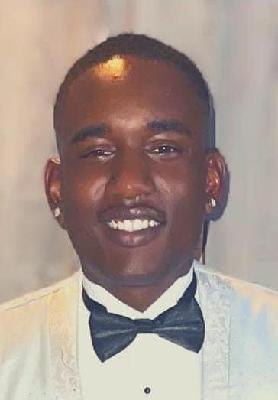
Juan Pedro Garcia, 23-year-old Hispanic/Latino male, was shot to death on October 4, 2014, in Memphis, Tennessee, after a night that began as a homecoming. He and another young man had arrived in the city by bus from Texas, and family dropped them at a house on Gherald Street in the Nutbush neighborhood, where several young men from the same hometown in Mexico were staying.
As the afternoon gave way to evening, friends gathered to welcome them, drinking beer and talking in the yard and around the front of the house, the kind of loud, ordinary celebration that’s supposed to end with laughter, not sirens.
Close to 10:00 p.m., the mood snapped. Two African-American men approached from the street and fired into the air, turning the yard into a frozen stage. Witnesses described the gunmen ordering people to get down and demanding wallets; one was said to be around five feet six inches, wearing a gray sweatshirt and dark pants, while the other was taller, wearing a red sweatshirt, dark pants, and a cap. Some of the men dropped to the ground, others hesitated, and the tension surged toward panic when the front door opened and men inside moved toward it. In that instant, the gunmen fired roughly ten shots toward the doorway and the people clustered near it, then fired again as others tried to run for cover around the side and back of the house.
Garcia was struck in the abdomen and rushed for emergency care, but the wound was catastrophic. At autopsy, the medical examiner described a bullet entering near the midline of the front abdomen and tearing through the small intestine before shredding major pelvic blood vessels, with the projectile continuing through the pelvis and coming to rest in the buttock—injuries that caused fatal blood loss. Another man was killed in the same attack, and at least two others survived gunshot wounds to their legs after surgery. By the time officers secured the scene, the porch and doorway had become a triage point, with injured men inside and outside the house, and survivors struggling to communicate while the attackers vanished into the night.
Investigators soon treated the shooting as an attempted armed robbery that escalated into murder. A Shelby County grand jury later indicted Marterius O’Neal and Antwon Young in connection with the October 4 attack, charging them with first-degree felony murder for Garcia’s death and for the second fatality, along with multiple robbery-related counts tied to the men targeted in the yard. The case also pulled in a third figure, Austin Yewell, who was indicted on numerous related counts; in later testimony, he described how his. 38-caliber revolver ended up in the orbit of the suspects, and how the plan was framed as going out to “hit a lick,” slang for a robbery, aimed at the group gathered outside the Gherald Street house.
In court, the violence of the night was reconstructed in blunt detail: the circling of the block, the approach on foot, the shots into the air, the shouted commands, the sudden volley toward the front door, and the frantic flight back to a waiting vehicle. Juries ultimately returned guilty verdicts against both men in separate trials. O’Neal was convicted of felony murder in Garcia’s killing and received an effective sentence of life imprisonment. Young was convicted of two counts of first-degree felony murder and multiple additional offenses, and the trial court imposed an effective life sentence, structured to run partially consecutive to sentences he was already serving in other Shelby County cases. Both convictions were upheld on appeal, leaving the story of Garcia’s last night framed not as a mystery without a name, but as a robbery attempt that turned into a double homicide with identified defendants and life sentences at the end of the road.