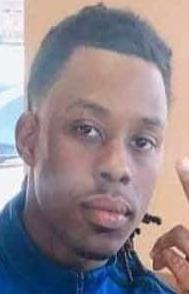
Phillip “PJ” Weeden was a 20-year-old man from Memphis, Tennessee, whose life was cut short by gun violence on March 3, 2021. He is remembered online through a digital memorial that fixes that date and place in stark, simple language: Phillip lost his life to a shooting in his own city, one more young face added to the growing tally of gun homicide victims in Memphis.
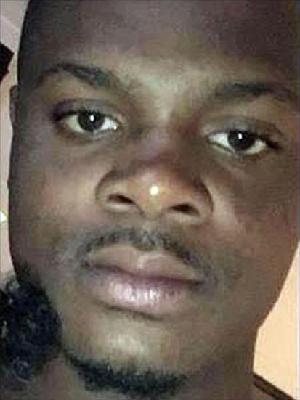
In photos that accompany his memorial, Phillip looks straight into the camera with a mixture of seriousness and youthfulness, wearing a sweatshirt emblazoned with “Sound of the Mound” and a large “M,” a likely nod to Melrose High School, the neighborhood school he attended. That image, shared and reshared, has become the way many strangers know him: a student-aged young man in a classroom setting, surrounded by peers, caught in an ordinary moment that now carries an extraordinary weight. It hints at a life centered on school, friends, and the rhythms of everyday teenage and young-adult life before violence intervened.
The memorial page allows loved ones to fill in details that official reports never bother to capture. There, Phillip is described as family-oriented, loving, kind-hearted, and deeply loved in return. Contributors note that he had no children of his own, but the way they speak about him suggests someone who occupied a special place within his family and circle of friends: a young man whose presence helped hold people together, and whose absence left them feeling, in the words of one post linked from his memorial, “incomplete.” Melrose High School appears as the school he attended, situating him in a specific community within Memphis, a part of the city that has long produced proud alumni even as it wrestles with the realities of poverty and crime.
The night or day of the shooting itself is far less clearly documented than the memories of who Phillip was. Publicly accessible summaries simply state that he was “lost to gun violence” in Memphis on March 3, 2021, without specifying the street, the circumstances, or even whether he was targeted or caught in crossfire. That absence of detail leaves a gap in the story, one that those who cared about him have had to fill with grief rather than answers. On his memorial, more than a hundred candles have been lit—each virtual flame a small, persistent sign that people are still thinking about him, still returning to that page to say his name and mark another birthday or anniversary that he did not live to see.
There are hints online that his death may have been connected, at least in time and place, to a broader pattern of crime. The memorial links to a news story titled “Multiple people arrested after a series of crimes, police say,” suggesting that law enforcement at some point arrested several individuals in connection with a crime spree that included the shooting that claimed Phillip’s life. However, the full text of that report is not readily accessible, and open sources do not clearly spell out who those suspects were, what specific charges they faced, or whether any of those charges were formally tied to Phillip’s killing. There is no easily found record of a named defendant being tried or convicted in his death, leaving the status of the case—from a public, documented perspective—uncertain.
Phillip’s story, as it can be pieced together from what is available, fits into a larger pattern that has drawn national attention to cities like Memphis. Advocacy and research organizations have noted that a disproportionate share of America’s gun homicides occur in a relatively small number of urban areas, with Memphis regularly appearing on lists of cities struggling with high rates of shootings and unsolved or under-reported cases. Against that backdrop, Phillip becomes more than a single victim; he is one of many young people whose deaths barely make the news, whose cases may or may not move through the courts, but who live on in the messages written by relatives and friends who refuse to let them vanish into statistics.
For Phillip “PJ” Weeden, the public record preserves only fragments: a name, an age, a city, a date, a cause—gunfire—along with a photograph of a young man in a school sweatshirt and a few lines testifying to his character. The rest of his story survives mainly in the private memories of those who knew him. From the outside, all that can be seen is the abrupt break: a promising life in Memphis cut short on a March day in 2021, and an investigation whose outcomes, if they exist, have not been clearly recorded in the open sources that remain.