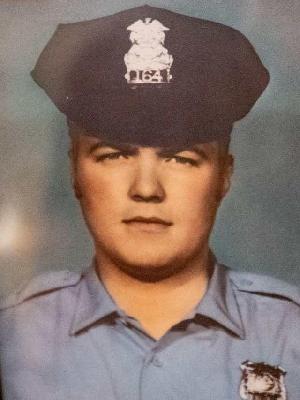
In the tumultuous summer of 1969, amidst the racially charged atmosphere that had gripped the city of York, Pennsylvania, a young white police officer named Henry Clinton Schaad, aged 22, found his life tragically cut short. On the second night of escalating riots, July 18, 1969, Schaad was on duty, riding in a city-owned armored truck with two other officers as they responded to reports of gunfire. As their vehicle navigated the turbulent streets, a rifle bullet pierced through its steel plating. The projectile fragmented, and a piece struck Schaad in the chest, inflicting a devastating internal injury. For two weeks, he fought for his life in a local hospital, but ultimately succumbed to his wounds on August 1, 1969. At the time of his death, he had been with the York City Police Department for only ten months and was survived by his wife and five-year-old daughter.
For over three decades, the murder of Officer Schaad remained an unsolved and painful chapter in York's history, a stark reminder of the deep-seated racial divisions that had erupted into violence. The investigation into his death had gone cold, with many in the community, particularly in the Black community, hesitant to come forward with information. However, in the early 2000s, a renewed effort to bring closure to the cold cases of the 1969 riots, including the killing of a Black woman named Lillie Belle Allen, breathed new life into the investigation of Schaad's death. This fresh look at the evidence and a shift in community willingness to cooperate with law enforcement finally broke the long-standing silence.
In October 2001, a grand jury investigation led to a significant breakthrough. Two men, Stephen Freeland and Leon Wright, were arrested and charged with the murder of Henry Clinton Schaad. Witnesses came forward, with some testifying that they had seen Freeland firing a rifle at the armored vehicle on the night of the shooting. One witness even recounted hearing Freeland later boast about hitting his target. The case against the two suspects moved forward, bringing with it the hope of long-awaited justice for the fallen officer and his family.
The legal proceedings culminated in a trial that brought the painful memories of the 1969 riots back into the forefront. On March 13, 2003, both Stephen Freeland and Leon Wright were found guilty of second-degree murder in the death of Officer Henry Clinton Schaad. Following their convictions, Freeland was sentenced to a prison term of nine to nineteen years, while Wright also received a significant prison sentence. The convictions, coming more than thirty years after the crime, marked the final chapter in the lengthy and arduous quest for justice for the only York City police officer to be killed in the line of duty.