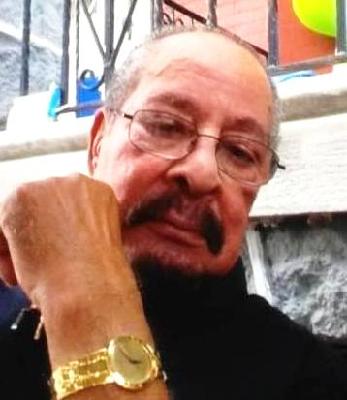
On October 26, 1999, the body of Ronald Turchi, a 61-year-old White male, was discovered in the trunk of his wife's car in South Philadelphia, Pennsylvania. Turchi, a longtime figure in Philadelphia's organized crime underworld, had been brutally murdered in what investigators recognized as a gangland-style execution. His body was found bound and unclothed, with his hands and feet tied and a plastic bag covering his head. He had been shot twice in the back of the head.
The discovery marked a violent end for a man who had once occupied one of the highest positions within Philadelphia's notorious Mafia organization.
Turchi had spent years building his reputation within the Philadelphia crime family, also known as the Bruno-Scarfo organization. During the mid-1990s, he served as consigliere, a senior advisory position within the Mafia hierarchy. His influence developed during a turbulent period in which rival factions fought for control of organized crime operations throughout Philadelphia and southern New Jersey. Turchi was associated with Ralph Natale, a former crime family boss whose leadership overlapped with the rise of Joseph “Skinny Joey” Merlino and his younger associates. By the late 1990s, however, Turchi had lost his position as consigliere, and his standing within the organization had deteriorated.
The circumstances surrounding Turchi's murder suggested a carefully planned execution rather than a spontaneous confrontation. His body was discovered on October 26 in a vehicle parked near Seventh and Federal Streets in South Philadelphia. The manner in which he had been restrained, shot, and concealed inside the trunk was consistent with the methods used in earlier Philadelphia mob killings. Investigators believed that Turchi had been deliberately targeted and that his death was connected to internal disputes within the city's organized crime hierarchy.
One theory centered on Turchi's alleged ambition to become the head of the Philadelphia crime family. According to information later provided by former mob boss Ralph Natale, Turchi had attempted to purchase recognition as the organization's leader by offering $10,000 to a high-ranking member of New York's Gambino crime family. The alleged arrangement represented an attempt to bypass Philadelphia's existing leadership and establish himself as boss through outside Mafia connections. Investigators considered whether this maneuver had placed Turchi in direct conflict with powerful individuals who viewed his ambitions as a threat. Natale's account, however, came from a cooperating witness whose credibility was disputed, and the proposed motive was never established in a murder prosecution.
Another possible motive involved Turchi's loyalty to Natale and the latter's decision to cooperate with federal authorities. In 1999, Natale began providing information to investigators about Philadelphia's organized crime activities, including murders, racketeering, and disputes among Mafia members. Turchi's association with Natale may have created suspicions within the organization about his own loyalties. His killing occurred during a particularly sensitive period, shortly after Merlino and several associates had been arrested in a major federal investigation. Joseph “Uncle Joe” Ligambi had emerged as the organization's acting leader, and authorities examined whether Turchi's murder was intended to eliminate a potential rival or discourage further cooperation with law enforcement.
As the investigation developed, authorities focused on several individuals connected to the Merlino-Ligambi faction. One of the most significant figures was Roger Vella, a former associate and driver for Merlino who later became a government informant. Investigators learned that Vella had provided information about Turchi's daily movements and activities before the murder. Vella subsequently acknowledged helping lure Turchi into the circumstances surrounding his death. His cooperation provided investigators with information about the planning of the killing and possible connections to members of the Philadelphia crime family. However, his accounts were complicated by inconsistencies in statements he had previously provided to federal authorities.
Vella eventually faced prosecution for other criminal activities. In October 2000, he was arrested in connection with the 1995 murder of South Philadelphia drug dealer Ralph Mazzuca. He later pleaded guilty to third-degree murder in that case and began cooperating with federal investigators. In January 2004, Vella also pleaded guilty to a federal racketeering-conspiracy charge involving organized crime activities, including his admitted participation in facilitating two gangland killings. On September 17, 2008, he was sentenced to 140 months in federal prison, with the sentence running concurrently with his existing state sentence. Although Vella's cooperation supplied information about Turchi's death, he was not separately convicted of murdering Turchi.
Investigators also examined the possible involvement of Joseph Ligambi and other senior figures in the Philadelphia Mafia. Cooperating witnesses Peter “Pete the Crumb” Caprio and Roger Vella provided information that authorities believed could help establish connections between Turchi's murder and the organization's leadership. Reports from organized crime investigations suggested that the killing may have been authorized by powerful members of the faction controlling Philadelphia's criminal enterprises. Nevertheless, allegations against Ligambi and others remained unproven in court. Prosecutors faced significant difficulties developing a case because much of the available evidence depended on cooperating criminals whose reliability could be challenged by defense attorneys.
The murder remained a subject of federal and local investigations for years. Philadelphia homicide detectives and the FBI continued examining Turchi's death alongside other suspected Mafia executions, including the killings of Raymond “Long John” Martorano in 2002 and John “Johnny Gongs” Casasanto in 2003. Investigators believed that information from cooperating witnesses and other organized crime investigations might eventually help identify those responsible. However, despite extensive scrutiny of the Philadelphia crime family's activities, authorities were unable to develop sufficient evidence to secure murder charges against the alleged organizers or actual gunmen in Turchi's case.
Ronald Turchi's killing remains an unsolved chapter in Philadelphia's organized crime history. Although investigators identified potential motives, obtained information from individuals associated with the crime family, and examined allegations involving prominent Mafia figures, no one has been successfully prosecuted for his murder. His death illustrated the dangers of internal power struggles within an organization where loyalty was constantly questioned and perceived challenges to leadership could have deadly consequences. More than two decades after his body was discovered in the trunk of a car on a South Philadelphia street, the precise sequence of events leading to his execution and the identities of those who carried it out have never been conclusively established in court.