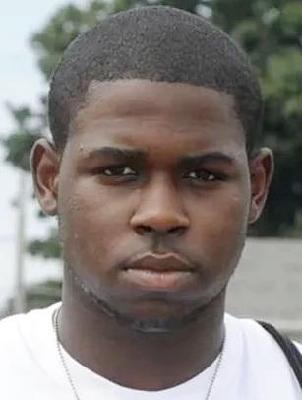
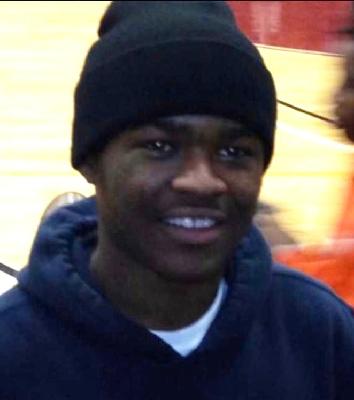
Steven Rashaad Bishop, a 26-year-old Black/African American man from Erie, Pennsylvania, died on August 18, 2016, after a shooting in the area of Cottage Street near East 21st Street. Online obituary information says he was born in Erie, attended East High School, worked in plastics shops, loved family, sports, music, rapping, video games, and cars, and was remembered as someone who smiled often and visited family regularly.
The case unfolded on an August day in east Erie. According to court records, surveillance video showed Bishop walking with Jaquel Shamon Tirado and two other individuals shortly before the shooting. Investigators said Tirado and another person appeared to be holding or supporting the right pockets of their pants, as though something heavy was inside. Moments after the group moved out of camera view on Cottage Street, eight gunshots were heard. Video then showed Tirado and another individual running away from the area.
Bishop was struck by gunfire. A forensic pathologist later testified that he died from a gunshot wound to the chest, with the bullet entering through the left proximal arm and injuring major internal structures, including the left lung, brachiocephalic artery, and trachea. Another bullet entered his right foot. Police said Bishop ran or staggered toward a house after being shot, and his body was found in a doorway.
The investigation quickly focused on Tirado, who was 17 at the time of the killing. Officers later found him at a residence on the same street where surveillance had last shown fleeing suspects. One officer testified that Tirado appeared nervous and sweaty and was found shirtless in an upstairs bedroom holding a baby. During a search of Tirado's residence, police found white T-shirts and tan pants in a plastic garbage bag in his bedroom. Investigators said the pants matched clothing seen in the surveillance footage.
Physical evidence became central to the prosecution's case. Gunshot residue was found on the front of both legs of the tan pants and on the right pants pocket. DNA testing on material from the zipper area of the pants showed a Y chromosome profile matching Tirado's paternal line, meaning it could have come from Tirado or a male paternal relative. Police also recovered evidence of two types of bullets, including 9 mm bullets from Bishop's body and. 32-caliber bullets at the scene, suggesting more than one firearm was involved.
An eyewitness, Ralph Green, testified that he was sitting on a porch near the shooting scene when he saw two teenagers lead Bishop down the street. Green said he heard gunshots, then saw Bishop stagger toward a porch. He also testified that a person wearing a white shirt and tan or gray pants put a gun into his pants pocket, followed Bishop toward the porch, and then ran away. Green could not identify the person's face, but his description of clothing became part of the evidence connecting Tirado to the scene.
Other people were examined during the investigation. Court records say police considered Eli Tirado, Jaquel Tirado's cousin, as a suspect because officers believed he had been present at the time of the shooting. Police found Eli Tirado's cell phones, jacket, and cigarette pack near the property where Bishop's body was recovered. By the time of trial, however, Detective Christopher Janus testified that, based on the investigation, he would classify Eli as a victim rather than a suspect. Investigators also looked at other persons of interest, including people identified in the surveillance footage as Keyon Lucas and Xavier Wykoff, but police did not charge them in connection with the shooting.
Jaquel Shamon Tirado was charged in December 2016 in Erie County criminal court, even though he had been a juvenile at the time of the crime. The charges included criminal homicide/murder, conspiracy to commit murder, aggravated assault, conspiracy to commit aggravated assault, recklessly endangering another person, tampering with physical evidence, possession of an instrument of crime, and firearm-related offenses. Some firearm counts tied to barrel-length proof were dismissed before trial, but the central murder and conspiracy counts remained.
At trial in August 2017, prosecutors argued that the surveillance footage, eyewitness testimony, gunshot residue, clothing evidence, and the circumstances of Tirado's flight proved he was involved in Bishop's killing. The defense challenged the sufficiency of the evidence, arguing that no one directly identified Tirado's face as the shooter, that the DNA evidence could also fit a paternal male relative, and that gunshot residue could indicate proximity to a shooting rather than firing a gun.
A jury convicted Tirado of first-degree murder and multiple related charges on August 3, 2017. He was tried and convicted as an adult. Although reports at the time noted that he faced a mandatory life sentence without parole, the trial court ultimately imposed an aggregate sentence of 42 years to life in prison. His convictions included first-degree murder, conspiracy to commit murder, aggravated assault, conspiracy-related assault counts, recklessly endangering another person, tampering with evidence, possessing an instrument of crime, and persons not to possess firearms.
Tirado later appealed, arguing that the evidence was not sufficient to prove he was the killer or that he had the specific intent required for first-degree murder. The Pennsylvania Superior Court rejected those arguments in 2020 and affirmed the judgment of sentence. The appellate court found that the combination of surveillance video, eyewitness testimony, clothing evidence, gunshot residue, DNA evidence, and the circumstances after the shooting were enough for the jury to convict.