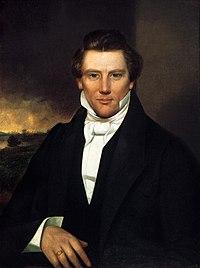
Hyrum Smith, a 44-year-old white male, was killed on June 27, 1844, in Carthage, Illinois. Hyrum, along with his brother Joseph Smith, the founder of the Latter Day Saint movement, was awaiting trial in Carthage Jail on charges of treason. The charges stemmed from their involvement in the destruction of the Nauvoo Expositor, a newspaper critical of the Smiths and their practices, including polygamy.
The destruction of the press led to public outrage and legal charges against the Smith brothers and other members of the Nauvoo City Council.
On the evening of June 27, 1844, an armed mob of 150-200 men stormed Carthage Jail. The mob, with their faces painted black with wet gunpowder, quickly overpowered the guards. Hyrum Smith was shot in the face almost immediately and fell, exclaiming, "I am a dead man!" Joseph Smith attempted to defend himself and his brother by firing a pistol at the attackers but was ultimately shot multiple times as he tried to escape through a second-story window. Both brothers succumbed to their injuries, marking a significant and violent turning point in the history of the Latter Day Saint movement.
Following the murders, five men were indicted for the killings of Joseph and Hyrum Smith. However, despite the severity of the crime and the evidence presented, all five men were acquitted at a jury trial. The trial and its outcome highlighted the intense anti-Mormon sentiment prevalent in the region at the time. The acquittal of the accused further fueled tensions between the Latter Day Saints and their neighbors, leading to continued conflict and persecution of the Mormon community.
The deaths of Hyrum and Joseph Smith were not spontaneous acts of violence but rather deliberate political assassinations. The mob's actions were condoned, if not outright supported, by some of the leading citizens in Hancock County, Illinois. The murders were a culmination of years of growing opposition to the Smiths' religious and political influence. The events at Carthage Jail underscored the volatile and often dangerous environment in which the early Latter Day Saints practiced their faith.