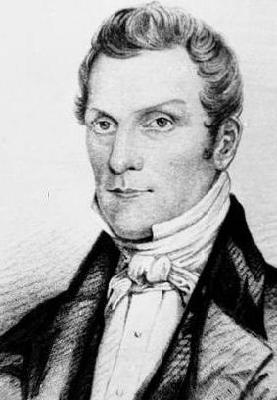
Joseph Smith Jr., a 38-year-old white male, was the founder and leader of the Latter Day Saint movement. He was killed on June 27, 1844, in Carthage, Illinois, while awaiting trial in the Carthage Jail on charges of treason. Smith, along with his brother Hyrum, was attacked by an armed mob of 150-200 men who stormed the jail. The mob's faces were painted black with wet gunpowder to conceal their identities.
Hyrum Smith was shot in the face and killed almost immediately, while Joseph Smith attempted to defend himself and then tried to escape by jumping from a second-story window. He was shot multiple times and fell to the ground, where he was shot again by the mob.
The events leading to Joseph Smith's death were rooted in significant tension between the Mormon community and their non-Mormon neighbors. Smith had ordered the destruction of the Nauvoo Expositor, a newspaper established by ex-Mormons that criticized him and other church leaders. This act led to public outrage and charges of inciting a riot against Smith and other members of the Nauvoo City Council. Although initially acquitted by the Nauvoo municipal court, Smith declared martial law in Nauvoo and called out the Nauvoo Legion, further escalating tensions.
Smith eventually surrendered to authorities after receiving assurances from Illinois Governor Thomas Ford that he would be protected and given a fair trial. However, while detained at Carthage Jail, the mob attacked. Despite the violent circumstances of his death, the legal aftermath saw little justice. Five men were indicted for the murders of Joseph and Hyrum Smith, but they were acquitted at a jury trial. The acquittal highlighted the deep-seated animosity and prejudice against the Mormon community at the time.
Joseph Smith's death marked a pivotal moment in the history of the Latter Day Saint movement. At the time of his death, he was also a presidential candidate, making him the first U.S. presidential candidate to be assassinated. His death led to a significant schism within the Mormon community and eventually the migration of many followers to Utah under the leadership of Brigham Young.