Crime Solvers Central
302 Cases Solved. Advancing justice for missing persons, unsolved homicides, unidentified and unclaimed remains.

Case Description

Any updates on this case? Let us know!
Summary based on 4 sources
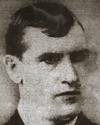
Robert W. McAneney was a veteran patrolman for the Chicago Police Department, a man of 48 who had dedicated nearly 24 and a half years of his life to the force. A widower with seven children, he was assigned to the 12th Precinct in the Woodlawn neighborhood. His long career and life were cut short in the pre-dawn hours of Saturday, November 16, 1907, while he was walking home, still in uniform, from his shift.

At approximately 4:30 a.m., as he neared the corner of 63rd Street and Wentworth Avenue in the Englewood neighborhood, just a hundred feet from his own front door, Patrolman McAneney was shot and killed. Another officer, Patrolman Helge Hullgren, was in a nearby restaurant when he heard the gunfire. Rushing to the scene, he found McAneney’s lifeless body on the sidewalk. McAneney's overcoat was still buttoned, and his own weapon remained in its holster, suggesting he was taken by surprise.

The investigation began immediately, piecing together the assailant's escape. Two key witnesses came forward. A cashier at an all-night restaurant, Miss Jeanette Holly, described a man of about 35 years old and 5 feet 8 inches tall, wearing a short tan coat and a hat that concealed his face. Shortly after the shooting, a ticket seller at the 59th Street "El" Station, John Keeney, saw a man in a state of extreme agitation run into the station. The man fumbled with his fare, dropping it on the floor before rushing through the turnstile and catching a northbound train.

Detectives initially pursued a theory of revenge, believing an ex-convict that McAneney had sent to prison may have been responsible. Two men were considered persons of interest: Charles Smith, who had been released from the Illinois State Penitentiary at Joliet two years prior, and Freeman Caniff, who had been imprisoned for 20 years and released only months before the murder. Despite these leads, the investigation stalled, and for a year and a half, the killing of Patrolman McAneney remained a painful, open wound for his family and the city.

The case broke unexpectedly in May 1909. A convict named James O'Neill, who was already serving a sentence for robbery in the Illinois State Penitentiary at Joliet, asked to speak with the Chief of Detectives, Captain P. D. O'Brien. Overcome by guilt, O'Neill confessed to the murder. He explained that on that November morning, he had committed a burglary just half an hour before his path crossed with McAneney's. Seeing the uniformed officer, O'Neill panicked, believing McAneney was about to stop and arrest him. "I have been unable to sleep since the night I killed him," O'Neill reportedly said. "I was going crazy and I am glad I told it."

Following his confession, the mystery that had shrouded the patrolman's death was finally lifted. The case, which had once seemed destined to remain unsolved, was officially closed. The resolution brought a measure of peace to a family and a police force that had mourned one of their own.

Patrolman McAneney was laid to rest in Calvary Cemetery in Niles, Michigan. In a lasting tribute to his service and sacrifice, his star, No. 1412, was officially retired by the Chicago Police Department on October 14, 1910. It became one of the first stars to be included in the department's Honored Star Case, a memorial created to preserve the memory of officers killed in the line of duty, ensuring that Robert McAneney's dedication would not be forgotten.