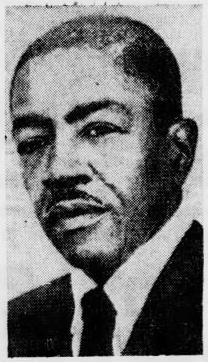
Benjamin Franklin Lewis, a 53-year-old African-American man, was a prominent political figure in Chicago. He served as the alderman of the 24th ward from 1958 until his tragic death on February 28, 1963. Lewis was known for his brash fashion and quick-witted personality, and he was a long-time resident of Chicago, having moved there from Macon, Georgia, as a child.
On February 28, 1963, Lewis was found shot to death in his ward office at 3604 Roosevelt Road.
He was discovered by a maintenance worker, sprawled facedown behind his desk, wearing a business suit, with his wrists handcuffed and a bloodstained couch cushion covering his head. The circumstances of his death were particularly shocking as he had been re-elected just two days prior, and there was speculation that his murder was politically motivated.
The investigation into Lewis's death was extensive but ultimately inconclusive. Police questioned his wife and girlfriends, and there were rumors that he had been threatened by a jealous husband. Investigators also considered the possibility of involvement by gamblers and mobsters with whom Lewis had done business. A police sergeant was identified as the last person to have spoken to Lewis, leading to speculation about police involvement, but the case went cold and remains unsolved to this day.
Despite the passage of time, the murder of Benjamin Franklin Lewis continues to be a symbol of the political corruption, police misconduct, and systemic racism that plagued Chicago during that era. His death is often cited as an example of the challenges faced by Black politicians in the city and the enduring legacy of violence and neglect in Black communities.
Lewis is fondly remembered in his ward for his service to the community, and in 1993, the City Council designated a section of Pulaski Road as "Benjamin F. Lewis Road" in his honor.
Is there anything else you'd like to know about Benjamin Franklin Lewis or the historical context of his life and death?