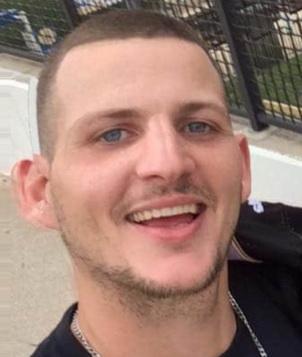
Baltimore’s underworld had already begun to tighten around John Lloyd Moore, 60, a Black man, when late September 2012 pulled him far from home. On September 27, 2012, Moore was riding as a passenger in a vehicle near Houston when state police stopped it and, after a search that uncovered roughly 30 kilograms of cocaine hidden in secret compartments, he and the driver, Brooke Lunn, were arrested on Texas charges. They were released on bond and returned to Maryland, but the seizure had set off alarms in a trafficking network that investigators said moved cocaine into Baltimore and funneled cash back out.
Less than a month later, on October 20, 2012, Moore was killed in Baltimore by a gunshot to the back of the head. Federal investigators later described the killing as a homicide they believed was directly connected to the Texas cocaine seizure—an act of retaliation or damage control in a world where a single traffic stop can put a sprawling enterprise at risk. In the picture painted by investigators, Moore’s death wasn’t presented as random street violence, but as a shadow cast by a supply line running between Houston and Baltimore.
As agents worked the broader case, they focused on a Baltimore-based organization they called the Jenifer drug trafficking organization, describing it as a cocaine distribution and money-laundering operation with ties reaching beyond Maryland. The government said the group relied on “courier vehicles” with hidden compartments—sometimes even shipped on car carriers—to move drugs north and cash south, with cocaine and money stored at residences and at a Baltimore business complex identified as RCH Plaza on West Franklin Street. Investigators also pointed to phone records showing Moore was in contact with Kedrick Arnold Jenifer around the time of the Texas stop, including before, the day of, and after the seizure—details offered as context for why agents believed the killing flowed from the disrupted shipment, even though those public filings did not announce a homicide charge for Moore’s death.
In October 2014, a federal grand jury indictment against nine alleged members of that organization was unsealed as arrests were made, and prosecutors publicly tied the investigation’s narrative back to Moore’s killing. The defendants named included Kedrick Arnold Jenifer, Tyrone Allen, Brooke Renee Lunn, Tracy Muse, Thomas Simmons, Andre Brewer, Michael Williams, Kermit Clark, and William Hegie, with the government describing seizures during the investigation that included large quantities of cocaine, substantial cash, jewelry, and luxury vehicles. While the prosecution centered on the cocaine conspiracy and related financial conduct, Moore’s death remained a stark waypoint in the timeline—an unsolved killing described as “believed to be related” to the 2012 seizure rather than closed by an arrest for murder.
By March 2016, the alleged leader, Jenifer, had pleaded guilty and was sentenced in federal court to 20 years in prison for conspiring to distribute cocaine, along with extensive forfeitures of cash, property, jewelry, vehicles, and other assets. Prosecutors also reported that multiple co-conspirators pleaded guilty and received prison sentences generally ranging from about 10 to 16 years. The public record in these federal announcements underscores the government’s view of motive and context—Moore’s killing as a lethal consequence of a major cocaine seizure—but it does not publicly identify a named shooter or announce a specific homicide arrest or conviction for Moore’s death.