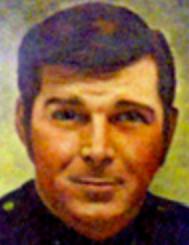
William Cann, the Chief of Police in Union City, California, was tragically assassinated on June 11, 1974, during a community meeting held at Our Lady of the Rosary Church in the Decoto neighborhood. The meeting was organized to address the escalating tensions between the police department and the Hispanic community, which had been exacerbated by the police shooting of Alberto Terrones in April 1974. Cann was shot by a sniper using a .30-caliber rifle from approximately 60 feet away. He was struck twice in the neck, and three other civilians were also injured in the attack. Despite immediate medical attention, Cann succumbed to his injuries on August 29, 1974.
The motive behind Cann's assassination was linked to the revenge for the death of Alberto Terrones, who had been shot by Union City patrolman John Miner. Terrones had allegedly stolen items from a grocery store and brandished a knife at both store clerks and Miner. When Terrones refused to drop the knife and continued advancing towards Miner, the officer shot him. The incident was ruled as justifiable homicide by the Union City Police Department, city government, local district attorney, and an Alameda County grand jury. However, the shooting intensified the already simmering racial tensions in the community.
The Chicano Liberation Front, a little-known organization advocating for Mexican-American issues, claimed responsibility for Cann's assassination. In 1981, four men were arrested and charged with Cann's murder. Leonard Baca, identified as the triggerman, was convicted of second-degree murder in 1984 and sentenced to five years to life in prison. Baca was released in 1991 but was found dead in his prison cell from a drug overdose two weeks later. The other suspects, Ruben Vizcarra, Angel Ramirez, and Paul Mendoza, were also implicated in the crime.
Cann's death marked a significant and tragic moment in Union City's history, highlighting the deep-seated racial and social tensions of the time. His assassination underscored the volatile relationship between law enforcement and minority communities, a theme that continues to resonate in discussions about policing and community relations today.