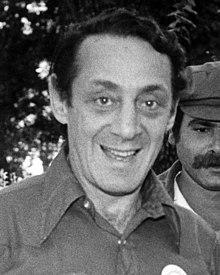
Harvey Bernard Milk, a prominent American politician and the first openly gay man elected to public office in California, was tragically assassinated on November 27, 1978, at the age of 48. Milk, who served on the San Francisco Board of Supervisors, was a pioneering figure in the LGBTQ+ rights movement. His death occurred at San Francisco City Hall, where he and Mayor George Moscone were shot and killed by Dan White, a disgruntled former city supervisor.
White had resigned from his position but sought to be reinstated. When Moscone refused to reappoint him, White entered City Hall through a basement window to avoid metal detectors and shot Moscone in his office. He then proceeded to Milk's office and fatally shot him as well.
The aftermath of the assassinations was marked by significant legal and social repercussions. Dan White was charged with first-degree murder, but his defense argued diminished capacity, citing depression and the infamous "Twinkie defense," which suggested that his consumption of junk food was a symptom of his mental state. On May 21, 1979, White was convicted of the lesser charge of voluntary manslaughter, receiving a sentence of seven years and eight months in prison. This verdict sparked outrage and led to the White Night riots, a series of violent protests in San Francisco. The public outcry also contributed to the abolition of the diminished capacity defense in California.
Harvey Milk's assassination had a profound impact on the LGBTQ+ community and the broader fight for civil rights. Despite his short tenure in office, Milk's legacy as a visionary leader and advocate for equality endured. He had championed a bill banning discrimination based on sexual orientation, which was passed by the Board of Supervisors and signed into law by Mayor Moscone. Milk's life and death continue to inspire activists and serve as a reminder of the ongoing struggle for LGBTQ+ rights. His story has been commemorated in various forms, including the 2008 film "Milk," which brought his contributions and the circumstances of his death to a wider audience.