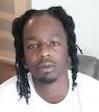
Larry David Martinez II, a 32-year-old Latino male, was shot and killed on October 31, 2005, in Paramount, California. Martinez had driven to an auto repair shop at 16675 Paramount Boulevard to have work performed on his car. As he entered the parking lot, Jesus Ramon Rosales approached his vehicle and the two spoke briefly. During the encounter, Rosales struck Martinez in the head and challenged him before pulling out a handgun and shooting him.
Martinez died from the gunfire.
The killing occurred against the backdrop of a gang rivalry. Court records identify Martinez as a member of East Side Paramount and Rosales as affiliated with the rival Compton Varrio T-Flats gang. The circumstances documented in the subsequent criminal case established that Rosales was the gunman who killed Martinez.
Rosales remained involved in violent activity after Martinez's death. On November 10, 2005, investigators said he drove to Indiana Avenue and fired several shots toward parked vehicles, with at least one bullet striking a nearby residence. Los Angeles County sheriff's deputies responded, and a witness identified Rosales as the shooter. Deputies soon spotted a burgundy or maroon vehicle matching the description and attempted to stop it, but Rosales fled at high speed. The pursuit ended after he crashed near Rosecrans Avenue and Century Boulevard and escaped on foot. Deputies recovered a. 22-caliber rifle and a. 357 revolver from the abandoned vehicle.
Authorities ultimately located Rosales on November 16. He had barricaded himself inside a garage, prompting a SWAT response. Officers used chemical agents to force him from the building and took him into custody. An Intertech Tec-9 pistol was subsequently recovered from the garage.
Prosecutors filed a six-count felony case against Rosales in March 2006. Among the accusations was a murder charge stemming from Martinez's killing, along with charges involving shooting at an unoccupied vehicle, shooting at an inhabited dwelling, robbery and possession of a firearm by a felon. When the case went before a jury, jurors found Rosales guilty of being a felon in possession of a firearm on May 18, 2006, but were unable to reach verdicts on the remaining charges, including murder. Prosecutors prepared to retry the unresolved counts.
Before a second trial could take place, Rosales reached a negotiated agreement with prosecutors. On December 1, 2006, he pleaded guilty to an amended charge of voluntary manslaughter for killing Martinez. As part of that plea, Rosales also admitted that he personally used a firearm and that the killing was committed for the benefit of a criminal street gang. On February 6, 2007, the court sentenced him to 25 years in California state prison, and the remaining charges were dismissed under the agreement. The documented sentence in the appellate record is therefore 25 years, rather than 40 years to life.
The court additionally ordered Rosales to pay $4,850.34 in direct restitution for Martinez's burial expenses. Rosales later challenged that portion of his sentence on appeal, but the California Court of Appeal upheld the restitution order and otherwise affirmed the judgment, ordering only clerical corrections to the abstract of judgment. The appellate court specifically recognized that Rosales had pleaded guilty to manslaughter for the killing of Martinez.
Information has also been reported indicating that three other people who were in Martinez's vehicle were killed within approximately ten days of his murder and that two of those deaths were believed to have involved retaliation by someone connected to Martinez's family. However, those assertions could not be independently confirmed through the available online court records, news archives, or other reliable public sources located during the search. The appellate record concerning Rosales does not identify three additional occupants of Martinez's vehicle or establish that their subsequent deaths were connected to his killing, so those allegations cannot presently be treated as confirmed facts.