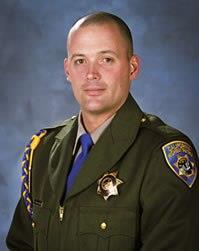
Kenyon Marc Youngstrom, a 37-year-old California Highway Patrol (CHP) officer, tragically lost his life on September 5, 2012, following a shooting incident that occurred the previous day. On the morning of September 4, 2012, Officer Youngstrom was on duty in the Contra Costa Area, patrolling southbound I-680 near Livorna Road in Alamo, California. He was assisting his colleague, Officer Tyler Carlton, who had stopped a Jeep for an obstructed license plate. As Officer Youngstrom approached the vehicle to speak with the driver, the driver suddenly pulled out a handgun and shot him in the head. Officer Carlton, witnessing the attack, immediately returned fire, fatally wounding the shooter. Officer Youngstrom was rushed to John Muir Medical Center, where he succumbed to his injuries the following day.
The shooter was identified as Christopher Boone Lacy, a 36-year-old man with a history of mental health issues. Lacy had been diagnosed with bipolar disorder and had experienced a mental breakdown in 1997 while in college. Despite his mental health struggles, Lacy had managed to earn a master's degree in computer science from San Francisco State University in 2005. In the year leading up to the shooting, Lacy had become increasingly reclusive, moving to Corning, California, and living in a trailer. He worked temporary jobs in Silicon Valley and had a strong interest in libertarianism and the Sovereign Citizen Movement, which rejects government authority and laws. Investigators found a handwritten suicide note at Lacy's home, believed to have been written during his college breakdown, and discovered that he had visited websites about creating explosives.
The investigation into the shooting was conducted by multiple agencies, including the Contra Costa County Sheriff's Office, the CHP, and the Contra Costa County District Attorney's Office. Authorities interviewed around 100 of Lacy's family members, friends, neighbors, and co-workers, and analyzed data from his computers and other digital devices. The investigation revealed that Lacy had no prior intention to kill or assault law enforcement officials, despite his strong anti-government beliefs. The gun used in the shooting was legally purchased by Lacy in 2010, although he did not have a concealed weapons permit.
Officer Youngstrom's death was a significant loss to the community and the CHP. He was a U.S. Army veteran and had served with the CHP for seven years. He is survived by his wife, Karen, their four children, his parents, and several siblings. The incident highlighted the dangers faced by law enforcement officers and the impact of mental health issues on public safety.