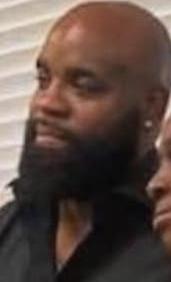
Joseph Charles “J.C.” Martin was a 71-year-old man from Baton Rouge, Louisiana. He is remembered as the kind of steady presence that quietly holds a community together, someone whose life was woven into the everyday stories of the people around him. To many, he wasn’t just a name or a face passing through the years. He was a husband, a father, a grandfather, a friend, and a familiar figure whose work and service carried meaning long after the workday ended.
For more than three
decades, J.C. built a life behind a barber’s chair. In a barbershop, conversations happen the way they’re meant to: honest, unhurried, and human. It’s where people show up not only to be groomed, but to be heard, to laugh, to vent, to trade stories, to remember someone who has passed, or to celebrate a new job, a new baby, a hard-earned milestone. A barber becomes a witness to life as it unfolds. Over those years, J.C. would have seen boys become men, seasons change, families grow, and grief soften into memory. His hands worked with skill, but it was his presence that likely made the difference—the patience, the familiarity, the quiet respect given to whoever sat down in his chair.
Beyond the barbershop, he was also a retired employee of the East Baton Rouge Parish School Board. That kind of work doesn’t always come with fanfare, but it leaves footprints. Schools are the heartbeat of a community, and the people who keep them running—day after day, year after year—help shape countless lives without ever expecting recognition. Retirement doesn’t erase the years spent showing up, doing what needed to be done, and contributing to something larger than oneself. His working life suggests responsibility, steadiness, and the sort of commitment that becomes a legacy through consistency.
His story also includes service to his country. J.C. was an Army veteran, serving from 1961 to 1963. Those years of service belong to a chapter of life that is often carried quietly. Some people speak often about what they lived through; others keep it close. Either way, military service leaves its mark—discipline, sacrifice, the experience of being part of something demanding and profound. It adds depth to a life already anchored in community and family.
He was a native of Donaldsonville and a graduate of McKinley High School’s Class of 1959, keeping ties through the McKinley Sports Alumni Association. That detail says something important: he didn’t simply move through life without roots. He stayed connected, he remembered where he came from, and he remained part of a larger circle of people bound by shared history. For many, those school connections become a second family over the decades—friends who remember the early versions of you, who witnessed your beginnings, who still call you by an old nickname with affection and familiarity.
When J.C. died, the love surrounding him was unmistakable in the family he left behind. He was survived by his wife, Alice Martin, and by children and stepchildren whose lives were linked to his in many different ways: daughters Tonda Martin and Jacanda Martin; son Kevin Martin; stepdaughters Joslin Shropshire, Elizabeth Johnson, and Margaret Jackson; and stepsons Anthony Johnson and Brian Johnson. He also left behind sisters Irma Anderson and Debra Jackson. His legacy continued through four grandchildren, 11 stepgrandchildren, and three stepgreat-grandchildren, along with many nieces and nephews. Families like that don’t just happen. They are built across years of holidays, shared burdens, ordinary days, and the kind of love that holds on even when life is difficult.
He was preceded in death by his mother, LouBirdia Buchanan; his father, Joseph Martin; his stepson, Sidney Johnson; and two relatives remembered as well, Gwendolyn Anderson and Jeffery Anderson. Those losses are part of the quiet sorrow many families carry—the absent seats at gatherings, the names spoken softly, the stories told again so that no one is forgotten. In that sense, J.C.’s passing joined a longer thread of remembrance, the way one generation gradually becomes the stories the next generation tells.
In honoring him, his family gathered for visitation and a service at North Highlands Community Baptist Church, with Bishop Claude White conducting the service, and he was laid to rest at Southern Memorial Gardens. Those moments—the church filled with family, the embrace of friends, the tears that come and go in waves, the shared silence—are the final acts of love a community offers. Funerals are never only about grief. They are also about gratitude: for time shared, for lessons taught, for love given, for the ways a person shaped the lives around them.
J.C. Martin’s story is the story of a life that mattered in the way so many truly important lives do—not through headlines, but through years of steady presence. Through his work, he served others. Through his family, he was surrounded by love that stretches forward into future generations. Through his roots and connections, he remained part of the place that made him, and he helped make it, too. And now, what remains is the memory of him—carried in the people who knew his voice, felt his hands on their shoulder in greeting, trusted him with their stories, and loved him enough to gather and say goodbye.