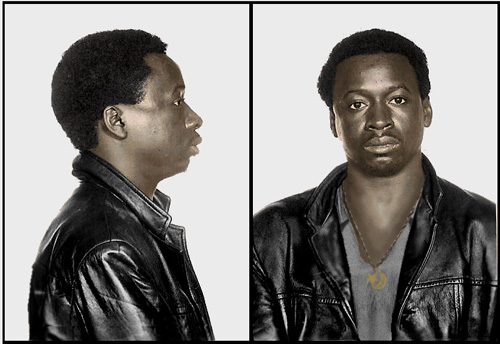
In the early hours of May 23, 1968, the promising life of Henry Dumas, a 33-year-old African American writer and poet, was tragically cut short on a subway platform in Harlem, New York. He was shot and killed by a New York City Transit Police officer at the 125th Street and Lenox Avenue station. The incident occurred just weeks after the assassination of Dr. Martin Luther King Jr., in a climate of high social and racial tension.
Dumas, a husband and father of two sons, was in New York to be the best man at a friend's wedding.
The circumstances surrounding the shooting remain shrouded in controversy and ambiguity. According to the officer's account, the only official version of events, he intervened in an altercation where he claimed Dumas was threatening another man with a knife. The officer stated that he ordered Dumas to drop the weapon, but Dumas instead turned and attacked him, slashing his cheek. In response, the officer said he fired his gun three times.
Despite the official report, the death of Henry Dumas is frequently described as a case of 'mistaken identity,' though the origin of this explanation is unclear. There were no known witnesses to the shooting, and a definitive, undisputed account of the confrontation has never emerged. The lack of clarity is compounded by the fact that the New York City Transit Police Department's records of the incident were destroyed in the 1990s when the agency merged with the New York City Police Department. Consequently, there was no public investigation or trial, leaving the full story of that fatal encounter on the subway platform forever unresolved.