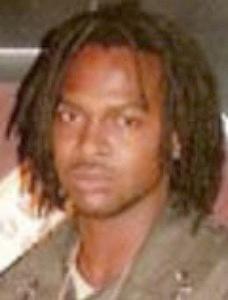
In the early morning hours of December 4, 2009, the life of 30-year-old Alexis Pena Cuevas was violently cut short on a residential street in New Carrollton, Maryland. Cuevas was discovered in the 6500 block of Jodie Street, having sustained multiple gunshot wounds. An autopsy would later reveal that he had been shot three times from a distance of more than two feet.
In addition to the fatal gunshots, he suffered lacerations on the back of his head from blunt force trauma, as well as scrapes on his head and shoulder. The cause of his death was determined to be the multiple gunshot wounds, and the manner of death was ruled a homicide.
The investigation into Cuevas's murder unveiled a story of drugs, debt, and betrayal. At the center of the narrative was Jacqueline Hernandez, a woman who served as the intermediary between Cuevas, her cocaine supplier, and her boyfriend, Carl Jeffrey Johnson. Cuevas would provide drugs to Hernandez on consignment, with the expectation of payment after Johnson had sold them. This arrangement took a dark turn, leading to a plan conceived by Johnson and others to abduct and murder Cuevas.
On the night of his death, Cuevas had picked up a friend, Lauri Pitlauga, around 12:30 a.m., and the two were driving around looking for a party. The events that followed culminated in the fatal encounter on Jodie Street. Evidence collected at the scene included a latent palm print from a car parked in a nearby driveway, which was later matched to an individual involved in the crime.
Jacqueline Hernandez became a key witness for the prosecution. Facing the possibility of a long prison sentence, and pregnant at the time, she chose to cooperate with the State's Attorney's office in January 2013. Hernandez pleaded guilty to second-degree murder and conspiracy to commit kidnaping. In exchange for her truthful testimony against Johnson, she received a 25-year prison sentence. Her testimony detailed the plan to kill Cuevas and the subsequent actions taken by Johnson, including his bragging about the assault and his efforts to dispose of the murder weapons, an AK-47 and an AR-15. This cooperation was crucial in bringing charges against the other individuals involved in the murder of Alexis Pena Cuevas.