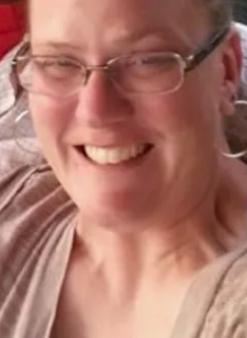
Do you know who murdered Cynthia Johnson? Cynthia Johnson was a 44-year-old Black/African American woman from Louisville, Kentucky, a mother and grandmother whose life was finally moving in a hopeful direction when it was cut short in the fall of 2012. She had moved to Louisville from Richmond, Virginia, determined to leave addiction behind and build something better for herself and her family.
By October 2012 she had been sober for about a year, and friends later recalled how she radiated strength and warmth, using her own recovery to encourage other women who were still struggling.
Church had become the center of her new life. At St. Peter’s United Church of Christ in west Louisville, she volunteered with women battling substance use, sharing her story of relapse and renewal and mentoring them through meetings and rough days. Pastors remembered her as humble and kind, someone who loved to testify about “triumph over hardship” and who had become a dependable presence in the church’s Women in Recovery program. She was raising a son and daughter, Ashley and Zachary Tuggle, and doted on her three grandchildren, trying to be the steady, sober matriarch she had once feared she could never be.
On Monday evening, October 29, 2012, Johnson joined a small group of women, including her daughter, to head to a Women in Recovery meeting at the church. It was already dark when they stopped at a convenience store near the intersection of 39th Street and Broadway, a busy stretch in west Louisville. Inside the store, a group of young men took notice of them. What should have been an ordinary errand on the way to a church meeting became the prelude to a robbery that turned deadly.
When Johnson and the other women walked out of the store, several men followed them into the street. According to witnesses, the men tried to rob the group, snatching one woman’s phone and punching her in the mouth. Johnson, who had rebuilt her life by learning to stand up for herself and others, stepped between the frightened women and the attackers, telling the men they didn’t have to hit anyone. In the next instant, a shot rang out. Johnson was struck in the chest and collapsed as the assailants ran off into the night.
Louisville Metro Police officers arrived around 7:20 p.m. to find her gravely wounded near 39th and Broadway. She was rushed to University of Louisville Hospital, but doctors could not save her. The woman who had spent the last year pulling others out of darkness had been killed on her way to help more of them. News of her death rippled quickly through St. Peter’s United Church of Christ, where congregants described feeling as though “one of our family” had been taken. Pastors spoke publicly about how far she had come, how devoted she was to lifting up women in recovery, and how senseless it felt to lose her just as she was thriving in her new role as mentor and caregiver.
In the days that followed, detectives canvassed the neighborhood and reviewed surveillance footage from the convenience store. Police said “several people” were believed to be responsible for the crime, and they appealed for tips from anyone who might recognize the young men seen around the time of the shooting. While investigators worked, Johnson’s family began the wrenching process of planning her funeral, which was held at G.C. Williams Funeral Home in early November. Her obituary, simple and spare, listed only her name, age, date of death and her children’s names, leaving the story behind those few lines to be filled in by news reports and the memories of those who loved her.
More than a year after the shooting, a breakthrough came. In December 2013, 16-year-old Dayarick Booker appeared in a Louisville courtroom and entered a not-guilty plea to charges of murder and robbery in Johnson’s death. Police and prosecutors alleged that he had been part of the group that followed Johnson and the other women out of the convenience store and that he was involved in the robbery that led to the shooting. He was a juvenile at the time of the crime, but the seriousness of the charges meant he would face them in adult court. For Johnson’s family, his arrest represented the first concrete sign that someone might be held accountable for what happened that night.
The case went to trial in 2015. Jurors heard how the group of men had trailed the women, how the robbery unfolded, and how Johnson was shot when she protested the violence against her friend. In May 2015, the jury returned a split verdict: Booker was acquitted of murder but found guilty of complicity to first-degree robbery in connection with the same incident. Jurors recommended a twelve-year sentence for the robbery conviction, and a judge later imposed that term, sending Booker to prison for his role in the crime even as the question of who pulled the trigger remained legally unanswered.
That same year, another hearing underscored the unresolved pain surrounding the case. After his sentencing, Booker asked the court for shock probation, a form of early release. At the hearing, Johnson’s daughter Ashley took the stand and told the judge she did not believe he had spent enough time in prison to truly understand the damage done or to honor her mother’s memory. Her words captured the tension that so often surrounds cases where a loved one’s killer is never fully identified or convicted: someone had been punished for the robbery, but in the family’s eyes, justice for the death itself still felt incomplete.
Years later, local coverage and appellate records continue to describe Booker’s conviction only for robbery, not murder, and there is no public indication that any other suspect has been successfully prosecuted for Johnson’s killing. Police once spoke of “several people” being responsible; whether all of them have been identified or whether the person who fired the fatal shot will ever face trial remains unclear. What is certain is the void left behind: a small congregation missing its tireless volunteer, a family without its mother and grandmother, and a recovery community that lost one of its most compelling voices. Johnson’s story now lives on in the memories of her children and grandchildren and in the ongoing appeals for information, each one hoping that the courage she showed in her final moments will one day be matched by a complete accounting of what happened at 39th and Broadway.