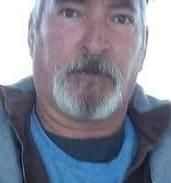
On a spring evening in 2015, Joseph Paul Wright, a 46-year-old man, was nearing two decades of life in South Carolina, far from the Pennsylvania town where he had grown up. Born in Wilkinsburg in 1969, he graduated with the Franklin Regional High School Class of 1987 before building a career with an associate degree in airplane mechanics and steady work as a maintenance technician for General Electric.
Friends and family remembered that away from work he was happiest outside, fishing, tending a garden, or simply being in the fresh air. At home in Easley, he shared a life with his wife, Lorrie Lenhart Wright, and their blended family, doting on his son Joshua, his stepson Joey Guzik, and the relatives who still tied him back to Murrysville, Pennsylvania.
On Thursday night, May 14, 2015, Joseph found himself not in his own home but at a residence on Bivens Street in the city of Pickens, a short drive from Easley. Late that night, something at the house escalated into a heated altercation involving him and his teenage son. What the argument was about has never been fully laid out in public reporting, only that tempers flared in the cramped space of that Bivens Street address and that, at some point, a gun was brought into the middle of a family conflict. Neighbors or witnesses called for help, and just before midnight—around 11:45 p.m.—Pickens police officers were dispatched to the 200 block of Bivens Street. When they arrived, they found Joseph gravely wounded with a gunshot to his side, lying on the property that was not his own, the night suddenly transformed from ordinary to catastrophic.
Paramedics rushed him from the scene to Greenville Memorial Hospital, the major trauma center for the region. Despite efforts to save him, the injury to his torso proved fatal, and he died at the hospital not long after the shooting, in the early hours that followed the late-night 911 call. In official notices and obituaries, his death was recorded as occurring on Friday, May 15, 2015, a technicality that underscored how quickly one day had bled into the next while doctors tried and failed to undo the damage from a single bullet. For his family, the timeline was simple: the father and husband who had left them on an ordinary Thursday evening did not come home again.
Police moved swiftly to identify and hold a suspect, and attention focused almost immediately on Joseph’s 17-year-old son, Joshua Wright. Officers took the teenager into custody, and within a short time he was formally charged with voluntary manslaughter in connection with his father’s death, along with a charge of discharging a firearm inside the city limits. Investigators described the case as one born in the “heat of passion,” the kind of highly emotional confrontation that can turn deadly in a matter of seconds when a weapon is present. Joshua’s attorney emphasized that the shooting did not take place at the family’s own home and publicly questioned what had been happening inside that Bivens Street residence, hinting at layers of context and witness accounts that were not yet visible to the broader community.
Reports at the time painted a complicated picture of a father and son whose lives had been closely intertwined. Obituaries noted how central Joshua was to Joseph’s world, describing a man who loved spending time with his wife and son and who built his off-hours around family, faith and the outdoors. Former classmates in Pennsylvania, stunned to learn that the easygoing teenager they had once fished with was now the victim of a homicide, spoke of their disbelief that his life had ended at the hands of his own child. In the days that followed, services were held first in South Carolina and then back in Pennsylvania, where Joseph was laid to rest at Plum Creek Cemetery, bringing him home to the region where his life had begun nearly half a century earlier.
Publicly accessible accounts from that period describe Joshua’s arrest, the manslaughter charge, and the fact that the investigation remained ongoing, but they do not detail the final outcome of the case or any later trial or conviction. With the accused being a juvenile at the time, subsequent court proceedings, if any, would have unfolded largely out of public view. What remains in the record is the stark outline of a family tragedy: a late-night argument on Bivens Street, a single fatal shot, and the ripple of grief that spread from Pickens and Easley back to Murrysville—where friends and relatives were left to reconcile their memories of Joseph Wright with the devastating way in which his life came to an end.