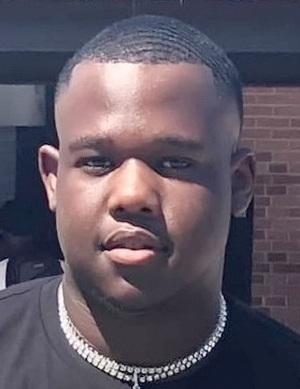
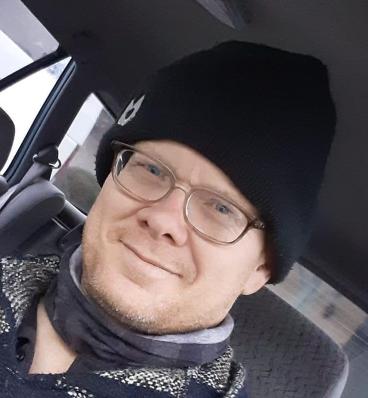
James Turner, a 48-year-old man from Columbia, South Carolina, began December 8, 2016, like any other day on Patricia Drive, a modest residential street on the city’s southeast side. That morning, however, the quiet of the neighborhood was broken by gunfire and a call for help that brought Richland County deputies racing to a home in the 7200 block.
When they arrived around 7 a.m., they found Turner unresponsive in a van outside the residence, his life already slipping away before anyone could understand exactly what had happened.
Deputies and emergency responders worked to get him to Palmetto Health Richland Hospital, where doctors officially pronounced him dead. The Richland County coroner later determined that Turner had died from complications of multiple gunshot wounds to the upper body, confirming that this was not an accident or a sudden medical emergency, but a violent killing. The details released by authorities painted a stark picture: the shots had been fired at close range, and the injuries were severe enough that even rapid medical care couldn’t save him.
Investigators quickly focused on the turmoil inside Turner’s personal life. Richland County Sheriff Leon Lott told reporters that the shooting grew out of an ongoing family dispute that had been simmering before finally erupting into deadly violence. The man at the center of that dispute, 24-year-old Brian Neil White, was described as an acquaintance of Turner’s family rather than a stranger who had wandered onto the property. Within hours of the shooting, deputies arrested White at the same Patricia Drive address where Turner had been found, and he was charged with murder in connection with the killing.
White was taken to the Alvin S. Glenn Detention Center to await trial, as Turner’s death shifted from a fresh investigation to a criminal case that would work its way through the Richland County courts. Over the next several years, prosecutors built their case, ultimately securing a conviction for murder. Court records show that White was sentenced to thirty-eight years in prison, a punishment that reflected the gravity of taking Turner’s life during what authorities described as a domestic-style conflict that escalated far beyond harsh words.
By late November 2019, White had been admitted to the South Carolina Department of Corrections to begin serving his sentence, with state records listing the murder offense date as December 8, 2016—the same morning deputies found Turner in the van outside his home. Those same records indicate that White’s projected release date is in late 2054, meaning he will spend the bulk of his adult life behind bars for the killing.
Today, Turner’s death is no longer an open investigation but a closed case whose outcome rests in the stack of court files and correctional records that trace the arc from a gunfire call on Patricia Drive to a decades-long prison term. What remains public is a stark narrative: a man shot multiple times outside his own home, a family dispute turned lethal, and a young acquaintance who now lives out his days inside a state prison, his conviction for murder upheld on appeal and his fate tied to the events of that single December morning in Columbia.