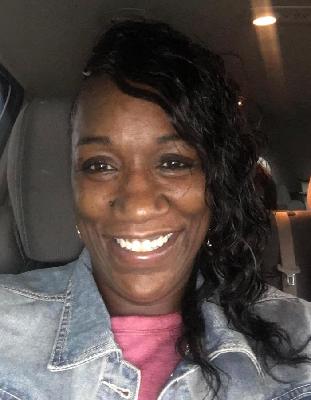
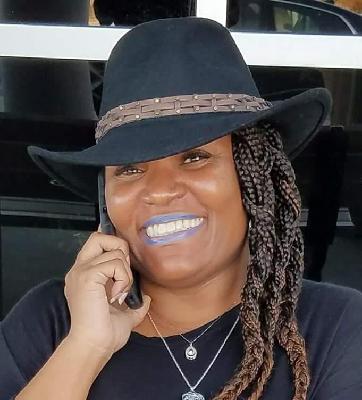
Vernita Danielle “Nita” White, a 19-year-old woman from Florence, South Carolina, was killed on October 27, 2018, after gunfire erupted at a home on Middleton Avenue in the Woodmont subdivision. Police responded to the call and found she had been shot inside the residence where officers said she lived, and the case was treated as a homicide as the Florence County Coroner’s Office moved to have an autopsy performed in Charleston at the Medical University of South Carolina.
In the early hours after her death, investigators focused on the people closest to her, and police charged her boyfriend, Deangelo Laquawn Thomas, with murder. As word spread, the story of what happened inside that house settled heavily over the neighborhood—what had been an ordinary Saturday night turning, in an instant, into a scene of flashing lights, urgent radio traffic, and a young life cut short.
Those who knew White did not let the first headlines be the last word. Coworkers and loved ones gathered outside the Burger King on West Evans Street—where she worked—to release balloons in her memory, describing her as someone who greeted customers with warmth and energy and carried herself with respect. Accounts shared in the days that followed also described her ties to church life and a youth group, and her efforts to keep moving forward, including work toward her GED.
The case ultimately ended not as an unsolved tragedy but as a courtroom reckoning. In September 2021, a jury found Thomas guilty of murdering White, and Circuit Court Judge Craig Brown sentenced him to life in prison. Prosecutors said the jury needed less than 45 minutes to reach its verdict, and the sentence carried a requirement that he serve the large majority of that term—85%—before any parole eligibility.
State prison records later reflected Thomas serving a life sentence for murder out of Florence County, with the offense start date listed as October 28, 2018. The public listing showed his incarceration within the South Carolina Department of Corrections system, marking the official end point of the criminal case even as the loss that began on Middleton Avenue remained with the people who had loved and worked alongside White.