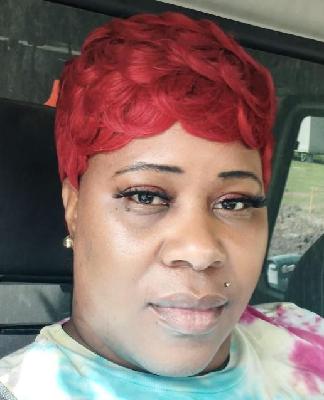
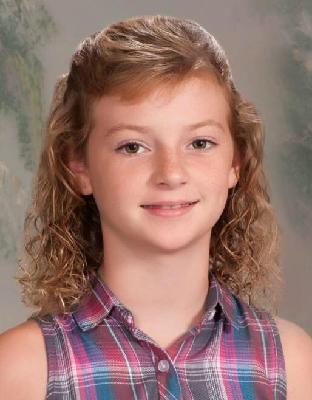
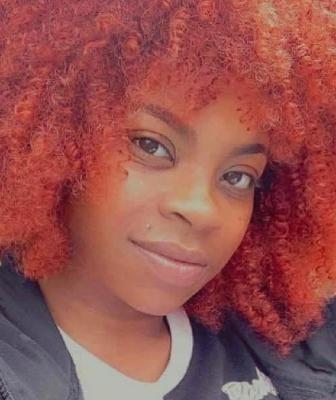
Raven Terrell Reid was a 24-year-old Black woman from the Bloomingvale community near Andrews, South Carolina, whose days were woven around a tight-knit family, Sunday dinners, and the little boy she loved more than anything. Local reports and memorials remember her as outgoing and adventurous, with a goofy sense of humor; she could light up a room with her presence yet often kept her deeper feelings to herself.
Born in January 1995, she grew up in a large extended family anchored by her mother, Rhonda Reid, and her grandmother, Mae D. Reid-Mayer, and was especially close to her brothers and cousins. An obituary notes her full name as Raven Sinquetta Reid-Terrell and describes how her family circle included her young son, Quenton Wilson Jr., for whom relatives shared responsibility and affection even before her death.
Sunday evenings were family time, and the Reids gathered regularly at a home where photographs lined the walls and food drew everyone back to the table week after week. In the days after her death, relatives told reporters how those gatherings had always been a constant in Raven’s life, and how they had quietly built a safety net around her child—grandmother, great-grandmother, aunts, uncles, cousins—so that he was never far from someone willing to take him in for the night. After the shooting, they vowed that care would now be permanent, with her mother and grandmother stepping forward to raise him together.
On the night of March 31, 2019, that world was shattered. Deputies in Williamsburg County were called to a report of gunfire on Honeysuckle Lane in the Bloomingvale community, just outside Andrews. When officers arrived, they found two young adults suffering from gunshot wounds in or near the roadway: Raven and 22-year-old James Dillon Edwards Davis of Kingstree. Both later died of their injuries, a fact confirmed by the deputy coroner and by gun-violence records that list them as fatally shot in Andrews at the start of April.
In the immediate aftermath, there were more questions than answers. Early coverage from Charleston television outlets focused on the loss itself, not yet naming a suspect. Family members gathered back at the Sunday-dinner house, bringing photos, telling stories, and trying to comfort one another while they planned a funeral at Greater St. Peter Apostolic Faith Church, where generations of Reids had worshiped and where Raven would be laid to rest alongside other relatives. Her mother spoke publicly about the surreal pain of preparing to bury a child who had, in her words, brought life into every room she entered, and her grandmother emphasized that Raven would always remain close because she would be buried with family.
Within days, investigators publicly named a suspect. The Williamsburg County Sheriff’s Office announced that they were searching for Jasper Session, describing him as wanted in connection with the double murder on Honeysuckle Lane in Bloomingvale, and warning that he was considered dangerous. Gun Violence Archive’s incident record for the case lists Session as a family member of one of the victims, notes that Raven and James were both killed, and states that Session was arrested. A few days after the shooting, local station WPDE reported that Jasper Junior Session had turned himself in to authorities in Williamsburg County, confirming that he was the man deputies believed responsible for the deaths of Raven and James.
Although detailed court coverage is scarce, state corrections records help fill in the rest of the story. South Carolina Department of Corrections data show that Jasper Junior Session, a man from Williamsburg County, is now incarcerated on two adult straight sentences for voluntary manslaughter, each carrying a 25-year term, with both offenses recorded in Williamsburg County on early April 2019 indictments. His projected release date is listed as June 27, 2040, and he is not eligible for parole, indicating that the original murder case was resolved by convictions on the lesser but still serious charge of voluntary manslaughter in connection with two deaths.
For Raven’s family, the conviction brought a measure of accountability but little true closure. Her relatives have spoken more about the child she left behind and the everyday emptiness at Sunday dinners than about the man imprisoned for her killing. The home where they once expected her to walk in laughing now holds her photograph instead, surrounded by candles and memories. Online tributes remember her as a loving, funny person who left too soon, and the gun-violence memorial page where friends describe her as outgoing, goofy, and unforgettable has become a digital vigil, with hundreds of candles lit in her name. In Bloomingvale and Andrews, her story endures as both a family tragedy and a symbol of the human cost of a few violent moments on a quiet country road.