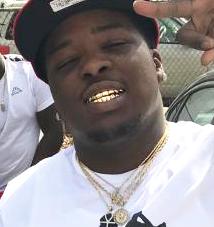
Ricky Robinson was a 24-year-old Black man who was killed on May 10, 2015, in St. Louis, Missouri—another life ended in the kind of sudden, irreversible violence that turns an ordinary day into a permanent before-and-after. Records that track fatal shootings list him as a victim of gun violence, with his death recorded as a homicide-level loss even as the public-facing details of what happened remain thin.
In the wake of his death, what’s visible to the public is more a silhouette than a full picture: the date, the place, and the fact that a gun was involved—enough to confirm the manner of loss, but not enough to explain the why. The kind of reporting that typically fills in the blanks—who was with him, what led up to the shooting, what witnesses saw, what detectives believed in the first crucial hours—doesn’t consistently surface in accessible sources tied to his name, leaving the story to be reconstructed from fragments.
What does come through clearly is the human aftermath. An obituary notice places him in Florissant, Missouri at the time of his passing and describes plans for a funeral service held days later at Day Star Church, a setting that suggests a family trying to gather itself, to speak his name out loud, to mourn him in community. In memorial spaces that catalog gun violence victims, people remembered him with affectionate shorthand—“Lil Ricky”—and spoke of him as goofy, loving, and caring, the kind of personality that lingers in stories told long after the worst day.
As for justice—arrests, suspects, charges, court proceedings—those same accessible sources do not identify a named suspect or describe an arrest or prosecution connected to his killing. The public trail, at least through widely reachable documentation attached to his name and date of death, goes quiet where you would hope it gets loud: no clear announcement of who was responsible, no courtroom narrative to explain what the violence was for, no conviction to signal an ending. In that silence, the death remains defined in public record by the barest facts, while the unanswered questions stay with the people who knew him best.