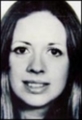
On December 12, 1910, Dorothy Harriet Camille Arnold, a 25-year-old aspiring writer from a wealthy and prominent New York City family, vanished without a trace. The daughter of perfume importer Francis R. Arnold, she was a graduate of Bryn Mawr College and fluent in several languages. That morning, Arnold left her family's mansion on East 79th Street, telling her mother she was going shopping for an evening gown for her sister's upcoming debutante party.
She declined her mother's offer to accompany her, stating she preferred to go alone. Arnold was last seen by a friend outside Brentano's bookstore on Fifth Avenue and 27th Street at approximately 2 p.m. She mentioned to her friend that she was going for a walk in Central Park. Arnold had about $25 to $30 in cash with her, but left her passport, jewelry, and other personal belongings at home. She failed to meet her mother for a planned lunch at the Waldorf-Astoria and never returned home.
Initially, Arnold's parents were not alarmed, assuming she was staying with a friend. However, as days passed with no word, they grew concerned. Fearing negative publicity and social scandal, the family chose not to immediately contact the police. Instead, they hired private investigators, including the renowned Pinkerton Detective Agency, to conduct a discreet search. Investigators checked hospitals, morgues, and jails in multiple cities but found no sign of the missing woman. A search of her room revealed burned papers in the fireplace, believed to be rejected manuscripts, and pamphlets for transatlantic ocean liners. After six weeks with no progress, the family finally reported her disappearance to the New York Police Department in January 1911, and the case became a media sensation.
The investigation into Dorothy Arnold's disappearance explored several theories, none of which could be definitively proven. The possibility that she had eloped with a man was considered, particularly her secret suitor, George C. Griscom Jr., a 42-year-old engineer from a wealthy Pittsburgh family. The family disapproved of the relationship, and it was discovered that Arnold had previously lied to them to spend a week with Griscom in Boston, pawning $500 worth of jewelry to finance the trip. At the time of her disappearance, Griscom was in Italy with his family and denied any knowledge of her whereabouts. Arnold's mother and brother traveled to Italy to confront him, but he maintained his innocence and even hired his own investigators to search for her upon his return to the United States. A letter from Arnold to Griscom revealed her despondency over a rejected short story, leading to speculation of suicide.
Other theories included a botched abortion, a particularly prevalent rumor at the time. In 1914, a physician arrested for performing illegal abortions claimed a woman matching Arnold's description had died during a procedure at his clinic, though this was never substantiated. The theory that she had been murdered was also heavily investigated. Her father, Francis Arnold, firmly believed she had been killed in Central Park and her body disposed of in a reservoir, though searches of the frozen lake yielded nothing. Over the years, several individuals confessed to being involved in her murder, but their claims were ultimately discredited. Despite the extensive investigation and widespread publicity, which included her photograph being published in newspapers across the United States and Europe, no credible evidence of Dorothy Arnold's fate has ever been discovered. The case remains unsolved, one of New York City's oldest and most baffling missing person mysteries.Last Seen: Dec 12, 1910