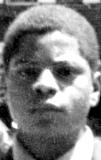
In the late summer of 1978, a group of five teenage friends, including 16-year-old Alvin Turner, vanished from the streets of Newark, New Jersey, leaving their families in a state of perpetual anguish. On the evening of August 20th, Alvin, alongside his companions Randy Johnson, Michael McDowell, Melvin Pittman, and Ernest Taylor, was last seen enjoying a game of basketball at West Side Park. Following their game, the boys reportedly entered a pickup truck driven by a local carpenter who sometimes employed them for odd jobs. This would be the last time any of them were ever seen or heard from again. The area from which authorities believe they disappeared is around Clinton Avenue and Fabyan Place. In the initial days of their disappearance, a mysterious phone call to one of the boy's mothers from an individual claiming to know their whereabouts for a price of $750 offered a fleeting, yet ultimately false, glimmer of hope.
The call was traced to a payphone in Washington, D.C., but the caller was gone by the time police arrived.
As weeks turned into months, and months into years, the families of the 'Clinton Avenue Five,' as they came to be known, were left with no answers. The initial belief by some authorities that the boys had run away was strongly contested by their loved ones, who described them as not having any history of such behavior. Alvin and most of his friends were students at Weequahic High School and had no significant police records. The case grew cold, and for over three decades, the fate of Alvin and his friends remained a painful mystery. The lack of any communication, use of their Social Security numbers, or applications for driver's licenses pointed to a grim conclusion. The emotional toll on the families was immense, with many of the boys' relatives passing away without ever learning what happened to their children.
A significant break in the case finally came in March 2010, when two men, Lee Anthony Evans, the carpenter the boys were last seen with, and Philander Hampton, were charged with five counts of murder and arson in connection with the teenagers' disappearance. A third suspect had died of natural causes in 2008. The prosecution's theory was that the boys were murdered in retaliation for allegedly stealing marijuana. It was alleged that the teenagers were taken to an unoccupied house, restrained at gunpoint, and left inside as the structure was set on fire. The house was completely destroyed in the blaze, and tragically, the remains of Alvin and his friends were never recovered. Following the charges, Alvin Turner was officially declared dead in 2011. In a turn of events, one of the accused men pleaded guilty for his role in the deaths, while the other was ultimately acquitted of the murder charges. The case of Alvin Turner and the Clinton Avenue Five is a heartbreaking narrative of five young lives cut short and the enduring pain of families left to grapple with an immeasurable loss. Despite the legal proceedings that eventually shed some light on the tragic circumstances of their disappearance, the absence of their physical remains means their families were never able to grant them a final resting place.Last Seen: Aug 20, 1978