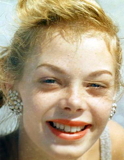
Brenda Schmalfeldt was 45 years old when she disappeared from Las Vegas, Nevada, on January 13, 2007. She was a white woman with blonde hair, about 5 feet 2 inches tall and 225 pounds, and her case was classified as endangered missing. At the time, she worked as a cocktail waitress at the New York-New York Hotel and Casino and was known as a regular at Zodies Bar, located in the 3000 block of Flamingo Road near Eastern Avenue.
On the day she was last seen, Brenda had been drinking at the bar, and the bartender eventually cut her off. Around 3:00 p.m., she left with an acquaintance, Raven Navajo, and that moment became the last confirmed public sighting of her.
What began as a missing person case quickly took a devastating turn. Less than a week after Brenda vanished, Raven Navajo went to police and confessed to killing her. According to case summaries and court reporting, Navajo said the two went to Navajo’s residence to watch movies after leaving the bar. Navajo later claimed an argument began over a belief that Brenda had taken money, and that the confrontation escalated into violence. Authorities said Brenda was beaten to death, and Navajo admitted taking money from her purse afterward. Investigators later found Brenda’s blood in Navajo’s garage, on the hood of Navajo’s 1996 Chrysler Sebring, and in a dumpster; Brenda’s jewelry was also found in Navajo’s apartment.
The search for Brenda’s remains became one of the most painful parts of the case. Navajo told authorities that Brenda’s body had been kept for several days before being placed in a dumpster. Investigators believed the dumpster contents were later taken to the Apex landfill northeast of Las Vegas. Police searched the landfill extensively, including an area described in court reporting as roughly the size of two football fields and dug deep into the trash, but they were unable to recover Brenda’s body. For Brenda’s family and friends, that meant the case carried not only the grief of her death, but also the anguish of being denied the chance to bring her home and lay her to rest with certainty and dignity.
The legal proceedings that followed focused not on whether Navajo had caused Brenda’s death, but on what degree of homicide the evidence supported. Navajo attempted to plead guilty to first-degree murder in October 2007 and asked for the harshest punishment, but the judge rejected the plea after finding insufficient evidence of premeditation. At trial, the defense conceded that Navajo had caused Brenda’s death but argued against a finding of premeditated murder. In February 2008, Navajo was convicted of second-degree murder in Brenda’s death, and in April 2008 was sentenced to 10 years to life in prison. Brenda’s family expressed deep pain and frustration during the proceedings, with loved ones describing the brutality of what happened and the lasting hurt caused by the disposal and non-recovery of her remains.
Brenda was remembered by those close to her as more than the circumstances of her disappearance. Reporting from the trial described her as generous, with family saying she had been preparing care packages for troops overseas before her death. A family friend said she continued to leave pink roses, Brenda’s favorite, near the entrance to the landfill where authorities believed her remains may have gone. The case of Brenda Schmalfeldt began as the disappearance of a 45-year-old Las Vegas cocktail waitress last seen leaving Zodies Bar on January 13, 2007, but it developed into a homicide case marked by confession, physical evidence, a difficult landfill search, a second-degree murder conviction, and a sentence of 10 years to life. Although Brenda’s remains were not recovered, the court proceedings established that she had been killed, and the case stands as a tragic story of a woman whose life, work, friendships, family bonds, and memory endured beyond the violence that took her from those who loved her.Last Seen: Jan 13, 2007