Crime Solvers Central
298 Cases Solved. Advancing justice for missing persons, unsolved homicides, unidentified and unclaimed remains.

Case Description

Any updates on this case? Let us know!
Summary based on 6 sources
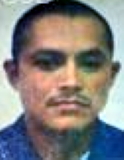
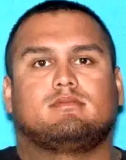
William Taylor Kaminskas, a 50-year-old man, has been missing since July 1, 2001, from Tuolumne County, California. He was last seen at Lake Don Pedro. Authorities have described his disappearance as being the result of a catastrophe and have classified his case as a "lost/injured missing" person.

On the day he vanished, Kaminskas had gone fishing on Lake Don Pedro. His wife reported him missing after he failed to return to their houseboat. Subsequently, deputies discovered his fishing boat along the shoreline of Lucas Bay, which is east of Fleming Meadows. Inside the boat were his two dogs and his wallet, but Kaminskas was nowhere to be found. This discovery prompted an extensive search of the area by the Tuolumne County Sheriff's Office and the United States Coast Guard, but these efforts were unsuccessful in locating him.

At the time of his disappearance, Kaminskas was 5'7" tall and weighed 160 pounds, with brown hair and brown eyes. He may have had a mustache. He was last seen wearing a black San Francisco 49ers jacket, black pants, and sneakers. Kaminskas has several distinctive tattoos: a mouse and the name "Bill" on his right arm, and the name "Carol" on his left arm. His nicknames are Bill and Papa Wheelie. He has not been heard from since the day he went missing.

Last Seen: Jul 1, 2001

Possible Unidentified Matches (1)

Unidentified remains cases whose details are consistent with this person, ranked by how closely they compare. Fields that are unknown in either case are left out of the score.

75%Possible
John Doe — Bakersfield, California
UP61436 • Found Dec 13, 2001
View case
Sex ✓Male
Age 100%Est. 38–52 vs 50
Race 100%White
Location 75%Same state
TimingFound 5 months after last seen
Weight 100%140–150 lb vs 160 lb

These comparisons are generated automatically from public NamUs case data and are not confirmed identifications. Only DNA, dental or fingerprint comparison by investigators can confirm an identity. If you believe two cases are connected, contact the agency handling the unidentified case.