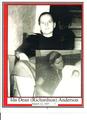
In the small community of Lake Odessa, Michigan, a young mother's sudden departure in 1965 has left a void that time has yet to fill. Mary Jean McLaughlin, a 26-year-old woman, was last seen by two of her children, her 8-year-old son and 6-year-old daughter, during a visit to their school. During this final, poignant encounter, she told her son that she was going away for a while but promised she would return. This promise would become the last memory her children had of her.
Following the school visit, Mary reportedly drove to Muskegon, Michigan, to her sister's home. There, she left a photograph before vanishing, seemingly without a trace. At the time of her disappearance, she may have been driving a dark blue Ford Falcon or a Mercury Comet.
The years stretched into decades with no word from Mary. It wasn't until August 2002, a staggering 37 years after she was last seen, that her son officially filed a missing persons report. The immense passage of time significantly hampered the ensuing investigation. Authorities searching for any sign of Mary's life after 1965 came up empty. There has been no activity on her Social Security number, nor have any public or private records surfaced that would indicate she was alive. Accounts from her son and neighbors painted a picture of a troubled marriage. Her husband was described as a violent man, and the couple was known to fight frequently. Shortly after his wife's disappearance, Mary's husband moved to Mississippi.
Mary's life before she vanished was marked by hardship. Born Mary Jane Beatty, she lost her mother at a young age and spent her childhood moving between various foster families, one of which was the Blairs, a surname she sometimes used. She was a 1957 graduate of Lakewood High School and was a mother to five children at the time she went missing. The investigation into her disappearance remains open, though the trail has long gone cold. Her son holds the belief that his mother initially left of her own volition but was murdered sometime after. Investigators are faced with the possibility that Mary either met with foul play long ago or managed to create an entirely new identity, so complete that she has remained unfound. The case of Mary Jean McLaughlin is a somber reminder of a family torn apart by unanswered questions and the enduring pain of not knowing.
Mary Jean McLaughlin was a 26-year-old woman and mother of five who vanished from Lake Odessa, Michigan, in 1965. The National Missing and Unidentified Persons System records her last-contact date as January 1, 1965, although other accounts describe her disappearance as occurring sometime later that year, making the precise day uncertain. One of the last known moments of Mary’s life was a visit to the school attended by her eight-year-old son and six-year-old daughter. Her son, Donald, later recalled that his mother told him she was going away for a while but would eventually return. It was an assurance a young child would naturally believe, yet Mary never came back, leaving her children with only the memory of that brief school visit and the promise she had made before walking away.
According to the account later given by Mary’s sister, Kathleen Lindstrom, Mary traveled from Lake Odessa to Kathleen’s home in Muskegon after seeing the children. She reportedly left a photograph there, and then every reliable trace of her ended. No confirmed explanation has emerged for why she left, where she intended to go, or whether she departed voluntarily. Mary may have been traveling in a dark blue Ford Falcon, although the vehicle could instead have been a Mercury Comet. She was described as having brown hair and blue eyes, standing approximately five feet five to five feet seven inches tall and weighing between 140 and 150 pounds. She wore eyeglasses and was also known by the name Mary Jane Blair. These details have remained important because there were no known financial, governmental, employment, or other records that could establish a later life under her known identity.
For decades, Mary’s disappearance was not formally treated as a missing-person investigation. Her son did not report her missing until August 2002, roughly 37 years after the family last saw her. By then, investigators faced the enormous challenge of reconstructing events from fading childhood memories, family recollections, old photographs, and records created long before modern computerized databases existed. A review of available information reportedly uncovered no public or private record of Mary after the mid-1960s. Her Social Security number had shown no activity, and nothing was found to demonstrate that she had established a home, taken employment, sought government benefits, or died under her known name. The long delay did not necessarily mean that her family had forgotten her; rather, the circumstances surrounding her departure appear to have left her children without the ability or information needed to initiate a formal search when they were young.
The Michigan State Police became the primary investigating agency, working with the Lake Odessa Police Department to preserve Mary’s case and search for answers despite the passage of time. DNA reference samples from her daughter and son were completed and entered for comparison through national identification systems, giving investigators a way to compare unidentified remains with Mary’s biological family. Her high school graduation photograph and an earlier image of her as a teenager have also been circulated so that members of the public can see the woman behind the case rather than only a name in an old file. No publicly confirmed sighting, arrest, suspect, or definitive evidence explaining her disappearance has been announced.
Mary’s children were left with an especially painful kind of uncertainty. Their final encounter was not marked by an obvious emergency or a witnessed act of violence, but by a mother saying goodbye for a while and promising to return. Whether she planned a temporary absence, was struggling with circumstances unknown to her children, assumed another identity, encountered someone who harmed her, or became the victim of an accident has never been established. Her visit to Muskegon and the photograph she left with her sister remain among the final known pieces of her story, but they have not revealed where she went next. In overview, Mary Jean McLaughlin disappeared after visiting two of her children at school in Lake Odessa and apparently stopping at her sister’s home in Muskegon; she left behind five children, no verified trail after 1965, and a mystery that remains unresolved despite later police involvement, family DNA collection, and decades of efforts to learn what happened to her.Last Seen: Jan 1, 1965