In the winter of 1970, in a quiet neighborhood west of Ann Arbor, Michigan, a family's life was irrevocably altered. On the morning of January 19th, 14-year-old Cynthia Coon left her home on Warrington Road for her one-mile walk to Forsythe Junior High School. It was a walk she preferred over taking the bus, a small act of independence for the teenager. However, Cynthia, known to her loved ones as Cindy, never arrived at school that day and did not return home that evening.
She was a good student with no history of running away, making her disappearance all the more alarming. At the time she vanished, she was wearing a tan coat, black boots, and a multicolored scarf and hat, and carrying a colorful bookbag with only a few dollars in her possession.
Weeks turned into months with no word from Cynthia, leaving her family in a state of agonizing uncertainty. Then, in early April, a glimmer of hope arrived in the form of two phone calls. On April 1st and again on April 2nd, 1970, Cynthia contacted her parents. During these brief conversations, she sounded distressed and disoriented, claiming she did not know her whereabouts. The calls were traced to the Detroit area, but provided no concrete leads as to where she was or who she might be with. Tragically, these would be the last times her family would ever hear her voice. Their torment was further compounded on May 5, 1970, when they received a chilling extortion-type phone call, but no further communication followed.
Decades have passed since Cynthia Coon’s disappearance, yet the case remains unsolved, leaving a void in the lives of her family and community. In 2018, a potential and disturbing lead emerged when authorities named Arthur Ream, a convicted murderer, as a possible suspect in Cynthia's case, as well as the disappearances of several other young girls. Ream was serving a life sentence for the 1986 murder of 13-year-old Cindy Zarzycki. While incarcerated, Ream reportedly confessed to his cellmates that he was a serial killer with multiple victims. This information led investigators to search a property where Zarzycki's body had been found, but the search for other remains proved unsuccessful. Ream died in prison in 2024, taking any potential secrets with him. The investigation into Cynthia's disappearance is ongoing, a cold case that serves as a painful reminder of a young life interrupted and the enduring mystery that surrounds her fate.
Cynthia Coon was a 13-year-old girl living in the Ann Arbor area of Michigan when she disappeared on January 19, 1970. Although one federal missing-person record lists April 2 as her last-contact date, the National Center for Missing & Exploited Children and other published accounts identify January 19 as the morning she was last seen in person. At approximately 7:30 a.m., Cynthia left her family’s home in the 1400 block of Warrington, west of Ann Arbor, intending to attend classes at Forsythe Junior High School on Newport Road. She reportedly preferred walking rather than taking the bus, and the trip to school was only about a mile. On that winter morning, she set out along what should have been a familiar route, but she never arrived at school and did not return home that evening.
Cynthia’s unexplained absence was deeply alarming because she was reportedly a good student and was not known for running away. She was described as having brown hair and brown eyes, standing about five feet four inches tall and weighing approximately 110 pounds. What happened after she left home has never been established. Investigators could not determine whether she encountered someone along the route, entered a vehicle, changed her plans voluntarily, or was taken against her will. There were no confirmed witnesses who publicly described seeing her after she began the walk, and no reliable physical evidence has emerged to show where she went. A routine school morning had turned into a disappearance with no clear scene, no established destination beyond the school, and no immediate explanation for why Cynthia had seemingly vanished.
The mystery became even more disturbing when Cynthia contacted her family after she disappeared. Records state that she made two calls home, one on April 1 and another on April 2, 1970. During those conversations, Cynthia reportedly said she did not know where she was. The limited information available does not explain whether she sounded frightened, whether another person could be heard nearby, how long the calls lasted, or whether investigators were able to trace their origins. Her statement that she did not know her location raised troubling possibilities, including that she was being moved from place to place, held somewhere unfamiliar, confused about her surroundings, or prevented from providing details. Those calls became the last known direct contact between Cynthia and her family.
Another unsettling development followed on May 5, 1970, when Cynthia’s family received what authorities described as an extortion-type telephone call. Public records do not provide a full account of what the caller demanded, whether the person offered proof that Cynthia was alive, or whether investigators considered the call genuine. It is therefore unclear whether the caller possessed actual knowledge of her disappearance or was exploiting a grieving and frightened family. No publicly confirmed ransom exchange or recovery followed, and Cynthia never contacted her loved ones again. The call added another painful layer of uncertainty because it suggested the possibility that someone knew what had happened while offering the family no dependable path to bring her home.
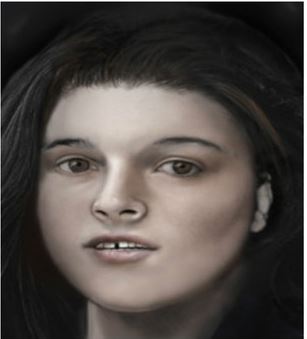
The Washtenaw County Sheriff’s Office has remained the investigating agency, maintaining the case under its original 1970 file number. Cynthia’s information was later entered into national missing-person systems, including NamUs and the National Center for Missing & Exploited Children. An age-progression image was created to show how she might have appeared at 59 years old, allowing later generations of investigators and members of the public to visualize the adult Cynthia might have become. DNA reference samples were also collected from her brother and sister. Complete mitochondrial and autosomal DNA profiles from those relatives were uploaded to national databases so they could be compared with unidentified remains and other evidence. Additional samples attributed to maternal cousins were tested but were not entered into the national system because the genetic results were not consistent with the relationships as reported.
No arrest, publicly identified suspect, or confirmed explanation has been announced in Cynthia’s disappearance. There is no verified evidence connecting her case to any particular offender, and theories about what happened remain unproven. The absence of a known crime scene, the passage of decades, and the limited technology available when she vanished have all complicated the investigation. Witnesses who might have noticed something unusual during Cynthia’s walk to school may no longer be available, and details that once seemed insignificant could have been lost before investigators understood their importance. Even so, the preserved family DNA, original law-enforcement file, photographs, and age-progressed image continue to provide avenues through which Cynthia might someday be identified or her fate explained.
Behind the evidence and case numbers is a child who left home expecting to attend another ordinary day of school. Her family endured the shock of her failure to return, followed by the brief hope and fear created by her telephone calls and the distress of an apparent extortion attempt. The fact that Cynthia reportedly said she did not know where she was makes her story especially haunting, because she was able to reach her family but apparently could not tell them how to find her. In overview, Cynthia Coon disappeared while walking from her home near Ann Arbor to Forsythe Junior High School on January 19, 1970, contacted her family twice in early April without knowing her location, and was followed by an extortion-type call in May. No further confirmed contact occurred, no suspect has been publicly named, and her disappearance remains an unresolved missing-child case preserved through law-enforcement records, family DNA and continued public awareness.Last Seen: Apr 2, 1970