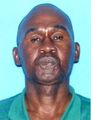
In the winter of 1997, a 37-year-old man named John Richard Moulis vanished from Orlando, Florida. He was last seen on January 11 of that year, and the circumstances surrounding his disappearance were distressingly sparse. Moulis, a native of Wisconsin who had relocated to the Orlando area in the mid-1980s, was living at the Ridge Club Apartments at the time. He worked in janitorial services at a Kissimmee attraction.
Following his disappearance, his burgundy and brown 1986 Dodge Aries station wagon was discovered abandoned at a Greyhound bus station on North John Young Parkway in Orlando, but this discovery yielded no further clues as to his whereabouts. For years, his case remained cold, with very few details available to the public or investigators.
Just over two months after Moulis was last seen, on March 24, 1997, a grim discovery was made in a wooded area in the nearby city of Sanford. Individuals walking their dog came across human skeletal remains near the intersection of Fulton Street and Mangoustine Avenue. The Orange County Sheriff's Office responded to the scene, and though the remains were determined to be human, no identifying information was found. A medical examiner concluded that the individual, estimated to be a male between 30 and 40 years old, was the victim of a homicide caused by sharp force injuries to the head. For more than two decades, the identity of this person remained a mystery, and the homicide case went unsolved.
Decades later, advancements in forensic technology would finally bring answers. In 2023, investigators submitted a tooth from the unidentified remains for DNA analysis. While a profile was developed, it did not produce any matches in the national DNA database. The case received a significant break in 2025 through a forensic genealogy grant. Investigators sent bone samples to a specialized lab, Othram, which successfully extracted a more detailed DNA profile. This profile was then used by the Florida Department of Law Enforcement's genetic genealogy team, which, in July 2026, found a possible match with a close family member of the victim. After obtaining a DNA sample from that relative, a positive identification was made, and on August 31, 2026, the remains were officially confirmed to be those of John Richard Moulis. After nearly 30 years of uncertainty, official reports indicated that Moulis had been located, bringing a difficult but definitive close to his missing person case, while simultaneously opening a new chapter in the ongoing homicide investigation.Last Seen: Jan 11, 1997