Crime Solvers Central
298 Cases Solved. Advancing justice for missing persons, unsolved homicides, unidentified and unclaimed remains.

Case Description

Any updates on this case? Let us know!
Summary based on the NamUs case record (MP4299) and 5 other sources
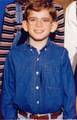
Karl Lee Larsen, a 44-year-old man from Paola, Kansas, was last seen on February 24, 2004. On the day of his disappearance, Larsen asked his mother to pick up his son from school, which was the last known contact anyone had with him. Karl was a single father and had full custody of his son. He was known to suffer from schizoaffective disorder, a mental health condition that required medication, but it is believed that he may have stopped taking his medication prior to his disappearance.

In late March 2004, about a month after he vanished, Karl’s tan 1992 Saturn was found abandoned behind a farmhouse in rural Linn County, an area where he often went duck hunting. The car was locked, and his keys and identification were found inside, but there was no sign of Karl. A receipt for a box of bullets was later discovered in his apartment, dated just before he disappeared, although no handgun was found.

There is speculation that Karl may have taken his own life, particularly given his mental health struggles and the fact that he had recently lost his job with the Paola Public Works Department. However, there is no concrete evidence to confirm this theory, and his case remains unsolved. Anyone with information is encouraged to contact local authorities.

Last Seen: Feb 24, 2004

Possible Unidentified Matches (1)

Unidentified remains cases whose details are consistent with this person, ranked by how closely they compare. Fields that are unknown in either case are left out of the score.

75%Possible
John Doe — Harrisonville, Missouri
UP123581 • Found Oct 18, 2022
View case
Sex ✓Male
Age 100%Est. 50–65 vs 44 when missing
Race 100%White
Location 95%29 mi away
TimingFound 19 years after last seen
Height 75%5'6"–6'1" vs 5'8"–5'9"

These comparisons are generated automatically from public NamUs case data and are not confirmed identifications. Only DNA, dental or fingerprint comparison by investigators can confirm an identity. If you believe two cases are connected, contact the agency handling the unidentified case.