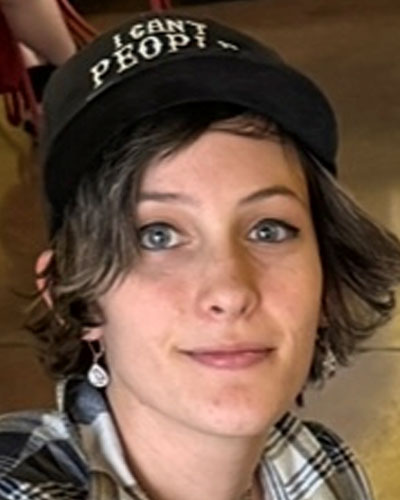
Amy Marie Yachimec was a 13-year-old female living in Phoenix, Arizona, when she was last seen on November 6, 1981. Official Silent Witness information places her at her family’s apartment at 3540 West Van Buren Street at about 10:00 that night, while other case accounts describe the residence as being in the 3500 block of West Van Buren near 35th Avenue. Amy was a white teenager with brown hair, blue eyes and pierced ears, approximately 5 feet 3 inches tall and 105 pounds.
She was reportedly wearing a blue terrycloth short-sleeved shirt, maroon slacks and blue slip-on shoes; descriptions of her jewelry include gold post earrings and a thin gold chain necklace. The evening initially appears to have unfolded quietly at home, but at approximately 10:30 p.m., 25-year-old neighbor Raymond Diaz and his 20-year-old girlfriend reportedly arrived to take Amy to a party. Before leaving, Amy awakened her 12-year-old sister and invited her to come along. Her sister declined, and Amy left without her. That decision became one of the last ordinary moments her family would have with her before a disappearance that would haunt them for decades.
Accounts developed during the investigation placed Amy with Diaz and his girlfriend later that night. According to information summarized by The Charley Project, Diaz’s cousin told investigators that the three came to his residence and that Diaz expressed a sexual interest in the 13-year-old. The cousin reportedly refused to allow anything sexual involving Amy to take place in his home, after which Amy, Diaz and the girlfriend left together. Amy was never seen or heard from afterward. Even more disturbing was what allegedly happened later that same night: Diaz and his girlfriend returned to the Yachimec family’s apartment and asked the family what was wrong, although Amy’s relatives had not yet realized that she was missing. Case accounts state that Diaz was unclothed when he appeared at the apartment and that his girlfriend obtained a blanket for him. Amy’s mother subsequently filed a missing-person report with Phoenix police the following day. Diaz became a person of interest early in the investigation, but authorities did not believe they had enough evidence at the time to arrest him. For Amy’s family, the sudden transition from believing their daughter was simply away for the evening to realizing she had vanished left questions that would endure far beyond the first frantic hours and days of searching.
The investigation changed significantly years later. Silent Witness records state that investigators obtained several leads after Amy disappeared and that the case was revisited in 1988. Information developed during that renewed investigation led authorities to believe Amy had been killed and that her body had been concealed somewhere in a desert area. In May 1988, the Maricopa County Sheriff’s Office assumed responsibility for the case from Phoenix police because new evidence suggested the homicide had occurred within the sheriff’s jurisdiction. Detectives continued treating the matter as a homicide investigation, repeatedly examining evidence, interviewing witnesses and pursuing new leads. Searches were conducted for Amy, including searches based on the belief that her remains had been hidden in the desert, but none resulted in her recovery. Silent Witness has publicly described the matter as a “Missing Person/Homicide” and has emphasized the continuing importance of information that could help investigators locate Amy. The absence of her remains has been an especially painful element of the case: even as investigators became increasingly convinced of what had happened to her, her family was left without the ability to bring her home.
For decades, investigators lacked the forensic evidence necessary to move against the man who had been scrutinized since the beginning. That changed as scientific testing advanced. The Maricopa County Sheriff’s Office reported that new DNA evidence developed in March 2015 linked Raymond Diaz to Amy’s murder. Detectives combined that forensic evidence with older evidence and witness statements and worked with the Maricopa County Attorney’s Office Cold Case Unit. In 2018, Diaz was arrested and charged with first-degree murder in connection with Amy’s death, nearly 37 years after she disappeared. By then he was already incarcerated in Arizona for unrelated crimes, including kidnapping and sexual assault. The arrest represented an extraordinary turning point in a case that had survived decades of changing investigators, aging witnesses and evolving forensic technology. Arizona Department of Corrections records later documented that Diaz received a 35-year sentence for second-degree murder in Maricopa County case 2018-005414-001, with the offense dated to November 1981 and the sentence imposed in 2021. Those state records list his projected sentence expiration in 2046. The legal outcome established criminal accountability after an extraordinarily long wait, but it did not provide the answer Amy’s loved ones had sought most desperately: where she had been left.
Amy’s identifying information has continued to be preserved in official missing-person records so that she will not be forgotten. NamUs lists her under case MP4575 and records November 6, 1981, as her date of last contact in Phoenix, while the California Department of Justice also maintains a profile describing her brown hair, blue eyes, height, weight and clothing from the night she vanished. Those details are more than statistics; they preserve an image of a 13-year-old girl whose life was interrupted after she left her family’s apartment for what was presented as a nighttime social outing. Investigators ultimately built a case strong enough to obtain a murder conviction decades later, yet repeated searches have not recovered Amy’s remains. Her story therefore carries two intertwined histories: the disappearance of a child whose family spent years without answers, and the persistence of a cold-case investigation that eventually used modern DNA evidence to hold a longtime suspect criminally responsible. In overview, Amy Yachimec’s case began on November 6, 1981, when the 13-year-old left her Phoenix home with an adult neighbor and his girlfriend, developed into a homicide investigation after evidence pointed toward her death and concealment in the desert, and culminated decades later in Raymond Diaz receiving a 35-year sentence for second-degree murder; through all of those years, the enduring and heartbreaking unanswered question has remained the location of Amy herself.Last Seen: Nov 6, 1981