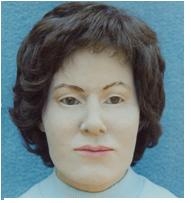
In November of 1987, the life of 15-year-old Rocio Sperry was tragically cut short, though the full story would not come to light for nearly two decades. At the time of her disappearance from Colorado Springs, Colorado, her husband, Joseph Sperry, was in Florida visiting family with their infant daughter. Rocio, who was born in Cuba and had spent time in foster care before marrying Joseph, was last seen wearing a blue sweatsuit and white high-top sneakers.
Joseph reported receiving a call from her early one morning where she expressed her love and mentioned a surprise that would be waiting for him upon his return. However, when he arrived back in Colorado Springs six days later, Rocio was gone. He discovered their apartment in disarray, with broken glass and blood, and their new television and car were missing. The car was located about a week later in a parking lot, having been driven over 300 miles. For years, speculation surrounded her disappearance, with some suspecting she had left voluntarily and others believing her husband was involved, a suspicion that deeply strained his relationship with their daughter.
The case remained cold for eighteen years, a period of agonizing uncertainty for Rocio's family. The breakthrough came from an unlikely source: a man already serving a life sentence for another murder. In 2006, Robert Charles Browne, who was imprisoned for the 1991 killing of 13-year-old Heather Dawn Church, confessed to Rocio's murder. Browne admitted to taking the young mother to the movies, strangling her, and then placing her body in a trash bin. He also confessed to stealing her wedding ring, television set, and car. Browne, a self-proclaimed serial killer, claimed responsibility for dozens of other murders across the United States between 1970 and 1995. His confession brought a painful resolution to Rocio's family, confirming their worst fears but also clearing her husband's name.
Despite Browne's detailed confession and subsequent guilty plea to first-degree murder, a crucial piece of the puzzle remains missing. Rocio Sperry's body has never been recovered. The confession provided some answers but no closure in the form of a final resting place. Browne's admission revealed the grim reality that Rocio had the misfortune of crossing paths with a prolific killer. The case is a haunting example of how a person can vanish, leaving behind a family to grapple with suspicion and loss for years, only to discover the truth was a random act of violence at the hands of a predator. The absence of her remains serves as a constant, sorrowful reminder of her tragic fate.Last Seen: Nov 15, 1987