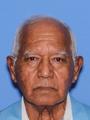
Eric Lawrence Brown was 23 years old when he was last seen in Tucson, Arizona, on October 5, 2009. Brown was a Black male who stood approximately 5 feet 5 inches to 5 feet 6 inches tall and weighed about 150 to 160 pounds. He had black hair, worn in an Afro at the time, and brown eyes. Public missing-person records say his disappearance followed an altercation with his girlfriend, after which his family received no further contact from him.
The available accounts do not describe where in Tucson the altercation occurred, who last saw Brown afterward, or what direction he may have traveled, leaving the first hours of his disappearance largely undocumented in the public record. Brown did not own a vehicle and was known to use public transportation, an important detail because investigators could not focus their search around a missing automobile that might have provided a location or other evidence. His case was classified as an endangered missing-person case and was investigated by the Tucson Police Department.
At the time Brown vanished, he was reportedly wearing a white undershirt beneath a red T-shirt, red basketball shorts, and black Adidas shoes with gold stripes. His appearance also included numerous distinctive scars and tattoos that could have helped identify him if he were encountered after his disappearance. He had pierced ears, although he was not believed to have been wearing earrings when he went missing, as well as a roughly two-inch scar extending from the corner of his mouth into his left cheek. Other scars included a surgical scar near his navel, scars from stab wounds on the left side of his chest, a scar beneath his left arm associated with a drainage tube, and a dog-bite scar on his right shin. His tattoos were particularly distinctive: “MR” was tattooed on the top of his right hand, “FLAW” on the top of his left hand, “JESS” on his lower right leg, “FAMILY THANG” across the middle of his upper chest, and “FLAWLESS 83-04” on the right side of his neck. Additional tattoos included “JAYCEE” on his right upper arm or shoulder, “TAZ” on his right forearm, “CITY” on his left forearm, and “36 STREET” on a forearm. These identifying characteristics became especially important as the days without word from Brown turned into months and years.
The public record contains very little information about what investigators learned in the immediate aftermath of Brown’s disappearance. Case summaries state that he associated with a local street gang at the time, but they do not identify a suspect, describe evidence tying any particular person to his disappearance, or provide a publicly documented explanation of what happened after the reported altercation with his girlfriend. There is likewise no public account of a confirmed sighting of Brown after October 5, 2009. The absence of contact was especially significant because his family reported hearing nothing from him following his disappearance. With no personal vehicle to trace and few publicly disclosed circumstances surrounding his final known movements, Brown’s case became one in which his physical description, clothing, tattoos, scars, relationships and transportation habits formed much of the publicly available investigative picture. The Charley Project, drawing its information from NamUs, has continued to preserve those details and describes the amount of publicly available information concerning the disappearance as limited.
A later and deeply consequential development appears in public case information derived from NamUs: partial remains were identified as belonging to Brown, with the notation that his NamUs file should nevertheless be maintained. The online record does not provide a clear narrative explaining when or where those remains were recovered, what portion of the remains was identified, how the identification was established, or whether additional remains were ever located. Because those details have not been publicly laid out in the available case summaries, the exact timing and circumstances surrounding the recovery remain unclear. A separate memorial listing for an Eric Lawrence Brown carries the same April 16, 1986 birth date given in the missing-person record and references burial arrangements through South Lawn Cemetery, but the publicly accessible listing supplies no explanation connecting the burial information to the circumstances of the disappearance or the identification of partial remains. For that reason, it does not by itself fill the substantial gaps left in the investigative history.
What remains most striking about Eric Brown’s story is how little of the crucial period surrounding his disappearance has entered the public record. A 23-year-old man disappeared from Tucson after a reported personal altercation; his family then endured an absence of communication with no publicly documented confirmed sighting to explain where he went or what happened to him. Investigators had an unusually detailed set of identifying characteristics, including numerous scars and tattoos, but the publicly available summaries reveal little about the search itself, possible witnesses, investigative leads or the circumstances that eventually led to the identification of partial remains. The case therefore stands as a story marked by both identification and unanswered questions: Eric Lawrence Brown was last seen in Tucson on October 5, 2009, his family lost all contact with him, authorities and missing-person organizations documented his appearance and circumstances in detail, and partial remains were later identified while the NamUs file was retained. In overview, the known history begins with Brown’s sudden disappearance at age 23, moves through years of uncertainty and scarce public information, and reaches a later identification of partial remains without a publicly explained account of how, when, or under what circumstances the events that followed his last known day unfolded.Last Seen: Oct 5, 2009