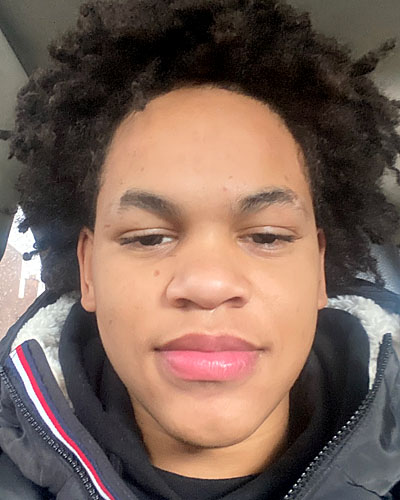
On the evening of March 31, 2010, 31-year-old Jacob 'Jake' Cabinaw, a male from the Traverse City, Michigan area, disappeared under perplexing circumstances. Earlier that day, he had enjoyed a game of frisbee golf with a friend at Hickory Hills. Around 7:30 p.m., he dropped his friend off in downtown Traverse City, mentioning he was heading home to study for a class at Northwestern Michigan College, where he was a student. Jacob was a member of the National Guard, a father to two sons, and was in the process of buying a house with his girlfriend. He was last seen wearing his work uniform: a grey jacket with 'Dave's Garage' printed on it and dark blue pants. He drove away in his 2002 silver Chevrolet Malibu, which had some minor damage on the front passenger side panel, and was never heard from by his family again.
The hours and days following Jacob's last sighting in Traverse City only deepened the mystery of his disappearance. Instead of returning home, his movements were traced through a series of electronic transactions and sightings that painted a picture of a long and seemingly unplanned journey south. At 1:00 a.m. on April 1st, he made an automated call to confirm his college enrollment, a requirement for his GI benefits. An hour later, his bank card was used to purchase gas in Mattawan, Michigan, several hours south of his home. By the early morning of April 2nd, his vehicle's license plate was run by police in Hollister, Missouri, and a few hours later, a sheriff's deputy in West Fork, Arkansas, noted him asleep in his car at a rest area. Later that same day, he was captured on a security camera using his debit card to buy gasoline in Sweetwater, Texas, over a thousand miles from home. This purchase was the last known activity on his account, which had insufficient funds and was covered by overdraft protection.
The investigation into Jacob Cabinaw's vanishing has left his family and law enforcement with more questions than answers. Foul play is suspected, though the theory that he voluntarily walked away from his life has also been considered. His family finds this unlikely, emphasizing his dedication to his two sons and his future plans. His only known connection to Texas was a brother stationed at Fort Hood. In the years since he went missing, there has been no activity on his cell phone, which he left without its charger, or his bank accounts. In 2017, a piece of information surfaced suggesting his car may have been taken to a scrap yard in Mexico, but this lead did not bring any definitive answers. Jacob Cabinaw was declared legally deceased in 2015, yet his case remains an active and unsolved missing person investigation, leaving his loved ones waiting for closure.
Jacob “Jake” Cabinaw was a 31-year-old man who was last in contact with family and friends in Traverse City, Michigan, on March 31, 2010. That evening, he played disc golf with a friend at Hickory Hills before driving the friend to the Open Space near downtown Traverse City. The friend invited Jacob to continue the night by going out for drinks, but Jacob declined, explaining that he needed to return home and study for a class. He drove away at about 7:30 p.m. in his silver 2002 Chevrolet Malibu, apparently beginning what should have been a routine trip back to the home he shared with his mother in Grawn. Instead, Jacob never arrived, and the path he took after leaving his friend would carry him unexpectedly across several states before ending in a mystery that remains unresolved.
Jacob was an Indigenous man of Ottawa and Chippewa descent who stood approximately five feet eleven inches tall and weighed about 150 pounds. He had short brown hair, brown eyes and was wearing his work uniform when he disappeared: dark blue or gray pants, a gray jacket bearing the words “Dave’s Garage,” and brown work boots. His Malibu carried Michigan license plate BKQ 4107 and had minor damage on the front passenger-side panel. Both Jacob and the vehicle remain missing, making the car one of the most important identifying pieces of evidence in the investigation.
Although March 31 is recorded as the date Jacob vanished from his normal life in Traverse City, later evidence showed that he continued traveling through the early hours and following days. At approximately 9:00 that night, he made a routine monthly call to an automated National Guard system to confirm that he remained enrolled in college. Around 1:00 a.m. on April 1, another account places that confirmation call, and by approximately 2:00 a.m., his bank card was used to purchase gasoline in Mattawan, Michigan, more than 150 miles south of Traverse City. These actions suggested that Jacob was conscious, mobile and personally handling at least some of his ordinary responsibilities as he moved away from northern Michigan. What investigators could not determine was why he had suddenly chosen to make the journey or whether anyone else was traveling with him.
The route continued far beyond Michigan. Shortly after midnight on April 2, a police officer in Hollister, Missouri, ran the license plate on Jacob’s Malibu. Roughly three hours later, a deputy encountered the car at the Brentwood Rest Area near West Fork, Arkansas. Jacob was reportedly found sleeping inside the vehicle. There was no indication at that moment that he was under duress, wanted for a crime or considered missing, so the contact ended without authorities detaining him. This encounter became the last confirmed occasion on which law enforcement saw Jacob in person.
Later on April 2, Jacob’s card was used twice in Texas. The first known transaction occurred at an Exxon Mobil station in Fort Worth at approximately 1:26 p.m. The card was then used at about 4:49 p.m. at a Skinny’s convenience store in Sweetwater, several hours west of Fort Worth. Surveillance imagery from the Texas portion of the journey reportedly captured Jacob, supporting the belief that he was still driving his Malibu and using his own card. Sweetwater lies more than 1,000 miles from Jacob’s home, and there has been no verified activity involving him after that stop. His card was never used again, his telephone ceased showing activity and neither he nor his Chevrolet was recovered.
Investigators found no obvious explanation for Jacob’s sudden cross-country drive. He had a brother stationed at Fort Hood, Texas, but that appeared to be his only significant known connection to the state. There was no evidence that he had arranged to visit his brother, announced plans for a trip or packed for an extended absence. His gasoline purchases reportedly exceeded the available funds in his account and were completed only because he had overdraft protection. He also left his cellular telephone charger at home, another detail that seemed inconsistent with a carefully planned relocation. The journey appeared impulsive, yet Jacob’s movements through Michigan, Missouri, Arkansas and Texas showed direction and purpose that investigators have never been able to explain.
At the time, Jacob was studying technical science at Northwestern Michigan College and was close to completing his mechanic certification. He worked as a mechanic at Dave’s Garage, a job he reportedly enjoyed, and had accumulated approximately $20,000 worth of professional tools. He had served in the Michigan National Guard and maintained contact with the military regarding his college enrollment. He was also the father of two sons, who were approximately six and twelve years old when he disappeared. Family members described him as devoted to his children and said he maintained a good relationship with his former wife. He was also beginning the process of possibly buying a home, giving him personal, educational and professional plans rooted firmly in Michigan.
Because Jacob appeared to be traveling alone and was seen moving voluntarily across several states, investigators initially considered the possibility that he had deliberately walked away from his old life. His family has consistently struggled to accept that explanation. They acknowledged that Jacob may have chosen to travel to Texas, but they believed he would eventually have returned or at least contacted his sons and relatives. They said he did not use drugs, had not expressed a desire to disappear and had too many important relationships and future plans to abandon without a word. No financial, telephone, employment or government record has surfaced to show that he established a new identity or continued living openly elsewhere.
Another significant lead emerged years later. In 2017, investigators received information suggesting that Jacob’s Malibu might have been associated with a scrap yard in Mexico. The public record does not explain the source of that information or whether authorities located documentation, witnesses or vehicle parts confirming that the car had crossed the border. The lead nevertheless expanded the possible endpoint of Jacob’s journey beyond Texas and raised difficult questions about whether the Malibu was dismantled, sold or destroyed. No public announcement has established that the vehicle was conclusively found in Mexico, and Jacob’s Michigan license plate has not led authorities to a confirmed location.
Foul play has been considered because Jacob and a full-sized automobile disappeared without leaving a confirmed trace, but no suspect or person of interest has been publicly identified. There is no known evidence showing that he met someone in Texas, was followed along the highway or encountered violence at a rest area, gas station or other stop. Investigators have also been unable to establish whether Jacob reached Mexico or remained somewhere in the southwestern United States. The evidence traces a clear route for nearly two days, but after the Sweetwater transaction, it ends completely. No remains, abandoned belongings or confirmed pieces of the Malibu have provided an answer.
The Grand Traverse County Sheriff’s Office has continued reviewing the case, and students in Western Michigan University’s Cold Case Program have assisted by organizing records, constructing timelines and maps, and examining people, social-media information and telephone evidence connected to the investigation. In 2025, the Federal Bureau of Investigation’s Violent Criminal Apprehension Program joined renewed public efforts to locate Jacob and issued information emphasizing his confirmed travel from Michigan through Arkansas and Texas. These renewed efforts demonstrate that authorities have not treated the passage of time as a reason to abandon the search.
Jacob was declared legally deceased in 2015, but that legal determination did not establish how he died or where he may be found. His official missing-person case remains open, and DNA reference profiles from close family members have been developed for comparison with unidentified remains. His sons have grown into adulthood without learning why their father left Michigan or what happened after his final known stop in Texas. A bench placed at the Hickory Hills disc-golf course by his sons now honors Jacob and connects them to one of the last places where he lived an ordinary part of his life before everything changed.
In overview, Jacob Cabinaw left a friend in downtown Traverse City on March 31, 2010, after saying he intended to go home and study, but instead drove south through Michigan and continued across Missouri and Arkansas into Texas. Law enforcement found him sleeping in his car in West Fork, Arkansas, and later transactions placed him in Fort Worth and Sweetwater, Texas, on April 2. After that, all confirmed activity stopped. His silver Chevrolet Malibu also vanished, and a later report possibly connecting it to a Mexican scrap yard has never publicly resolved the case. No suspect has been identified, no evidence has established whether Jacob left voluntarily or encountered harm, and his family remains caught between the documented journey he took and the unexplained silence that followed it.
Last Seen: Mar 31, 2010