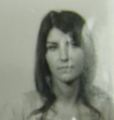
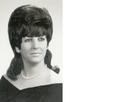
On a spring day, April 16, 1978, 28-year-old Joyce Alice Fisher disappeared near her parents' summer cottage in the Sister Lakes area of Michigan. She was a dedicated mother to her one-year-old daughter and was described as a reliable and responsible woman who was close to her family. That afternoon, she left her daughter in her mother's care to meet her estranged husband, Jerry Wayne Fisher, at a local antique store called Bell's Corners.
The purpose of the meeting was to sign over the title of a 1973 Chevrolet Vega to him. Joyce was last seen wearing a blue nylon jacket, a blue plaid shirt, and blue jeans. She drove her 1969 Buick to the store, telling the owner she would be back in about half an hour. She was never heard from again.
The circumstances surrounding Joyce's disappearance quickly raised concerns. Her Buick was later found parked in front of Bell's Corners with the keys still inside, but there was no sign of Joyce or any indication of a struggle. According to her husband, they left the store to get the title notarized but soon realized they had the wrong one. He claimed he dropped her back off at the store between 4:00 and 4:30 p.m. after giving her $500. However, other witnesses reported seeing him return to the store alone. Joyce and her husband were in the midst of a contentious divorce and a custody battle over their daughter. She had confided in friends and family that she was afraid of him, alleging he had been physically abusive and had threatened to take their child away from her, stating she would never see the child again. In the months leading up to her disappearance, she had resigned from her job as a special education teacher and moved in with her parents in a Chicago suburb, only returning to Michigan to facilitate visits between her daughter and her estranged husband.
Years later, in 1987, Joyce's estranged husband was charged with murder in connection with her disappearance. During the trial, a witness testified that just before she went missing, her husband, after hours of drinking, had mentioned meeting with her to sign papers and that 'no one would ever see her again'. The same witness also noted seeing rope and cement blocks in his truck. Despite this and other circumstantial evidence, he was convicted of the lesser charge of manslaughter. However, this conviction was overturned on appeal four years later due to what the court deemed 'marginal evidence' and a lack of physical proof. Joyce Fisher's body has never been found, and foul play is suspected in her disappearance. The case remains a painful mystery for her loved ones, a story of a young mother who vanished after meeting with the man she reportedly feared. Her disappearance left behind a grieving family and a community with unanswered questions about what happened on that April afternoon.
Joyce Alice Fisher was a 28-year-old woman who was last known to be in the Sister Lakes and Cassopolis area of southwestern Michigan on April 16, 1978. A devoted mother with blond hair and green eyes, Joyce stood approximately 5 feet 6 inches tall and weighed about 125 pounds. She was wearing a blue nylon jacket, a blue plaid shirt and blue jeans around the time she vanished. Joyce had traveled from the Chicago area to her parents’ summer cottage on Indian Lake, where she left her one-year-old daughter safely in her mother’s care before driving approximately six miles to Bell’s Corner, an antique store in Sister Lakes. She was supposed to meet her estranged husband, Jerry Wayne Fisher, to complete paperwork involving a vehicle title. She told the store’s owner that she expected to return in about half an hour. She never returned to the cottage, never reclaimed her daughter and was never reliably seen or heard from again.
Some official and court records differ by one day in describing Joyce’s final known movements. Missing-person records list April 16 as her date of last contact, while the Michigan Court of Appeals later summarized her disappearance as occurring on April 15. What remains consistent is that Joyce had gone to Indian Lake for a scheduled visit between Jerry and their young daughter and then left to meet Jerry concerning the title to a 1973 Chevrolet Vega. Joyce drove a 1969 Buick to Bell’s Corner and left it there before departing with him. The plan was reportedly to have the title notarized so Jerry could sell the Vega. According to Jerry’s account, they had driven only a short distance when Joyce realized that she had brought the wrong document. He said they turned around and that he returned her to Bell’s Corner sometime between 4:00 and 4:30 that afternoon after giving her $500 in cash.
The people at Bell’s Corner remembered the return differently. Witnesses said Jerry came back to the store alone, and no one could confirm seeing Joyce get out of his vehicle or return to her Buick. Jerry showed one of the men operating the store a title, but the document was reportedly for a vehicle other than the Chevrolet Vega they were supposed to be transferring. The correct Vega title was later found in Jerry’s safe-deposit box. Joyce’s Buick remained parked outside Bell’s Corner with its keys still inside. There was no visible evidence of a struggle around the car, but there was also nothing showing that Joyce had driven away, arranged for another ride or voluntarily walked out of her family’s life. From that point forward, her movements could not be traced.
Joyce’s disappearance occurred during the collapse of a troubled two-year marriage. She and Jerry had separated in December 1977 and were involved in divorce proceedings. Joyce had previously worked as a special-education teacher for the Dowagiac Union School District, but she resigned in January 1978 and moved with her daughter into her parents’ home in a Chicago suburb. She continued returning to Michigan about every two weeks so Jerry could spend time with their child. Those trips reflected her effort to remain responsible and preserve her daughter’s relationship with her father, even while Joyce reportedly feared what Jerry might do. Family members, friends and legal representatives later described a history of violence, threats and intense conflict within the marriage.
Joyce had told people close to her that Jerry had beaten her repeatedly, including while she was pregnant. She was reportedly afraid that he would take their daughter from her and said he had threatened that she would never see the child again. During the divorce proceedings, Joyce testified that Jerry had threatened to kill her in January 1978, approximately three months before she vanished. One of her divorce attorneys considered Jerry’s behavior so alarming that the attorney sought to prevent him from visiting the child until he underwent a psychiatric evaluation. Witnesses later described violent outbursts and a temper that had caused Joyce to fear for her safety. These accounts did not prove what happened during the final drive from Bell’s Corner, but they gave investigators a disturbing context in which to examine her disappearance.
Another witness told authorities that he had spent several hours drinking with Jerry in a bar shortly before Joyce disappeared. According to that account, Jerry mentioned that he was going to meet Joyce to sign documents connected to their divorce and allegedly said that after the papers were signed, no one would ever see her again. When the two men left the bar, the witness reportedly noticed rope and four cement blocks in Jerry’s truck. He did not immediately treat the statement as a genuine threat because Jerry was intoxicated. Years later, however, the remark and the objects seen in the vehicle became important pieces of circumstantial evidence considered by prosecutors. No rope, blocks, remains or other physical evidence was ever publicly established as having been used to harm Joyce.
The possibility that Joyce had chosen to leave was inconsistent with nearly everything her family knew about her. She left approximately $600 in her bank account and abandoned the car she had driven to the meeting. More importantly, she left her one-year-old daughter with her mother while promising to return. Joyce was described as reliable, responsible and exceptionally devoted to her child. She maintained close relationships with relatives and friends and had both immediate and long-term plans. Although the divorce had placed her under considerable emotional strain, those closest to her did not believe she would disappear without warning, abandon her daughter or take her own life. The complete absence of verified communication afterward strengthened the belief that she had not left voluntarily.
Following Joyce’s disappearance, Jerry reportedly declined to cooperate further with investigators and retained an attorney. He later moved to Florida and remarried in 1986. He gave differing explanations to people about what had happened to Joyce, at times saying they were divorced and at other times claiming that she had been placed in a psychiatric institution as a long-term patient. Joyce’s parents eventually obtained custody of her daughter after Jerry was accused of physically abusing the child. None of these later events established Joyce’s fate, but they contributed to continuing suspicion and kept investigators focused on the circumstances surrounding her final meeting with him.
In September 1987, more than nine years after Joyce disappeared, Jerry was charged with open murder. Prosecutors presented a case built almost entirely on circumstantial evidence because Joyce’s body had not been found, there was no identified crime scene and no witness had seen her harmed. Testimony focused on the history of domestic violence, Joyce’s fear of Jerry, the reported threats, his opportunity to be alone with her and the fact that witnesses saw him return to Bell’s Corner without her. The defense argued that Joyce had another life unknown to her family and suggested that she had become involved in cocaine trafficking between Chicago and Sister Lakes. No publicly established evidence confirmed that allegation.
The jury acquitted Jerry of murder but convicted him of involuntary manslaughter in May 1988. He received a sentence of seven and a half to fifteen years in prison, a term substantially longer than the sentencing guidelines ordinarily recommended for that offense. The verdict appeared, for a time, to provide legal recognition that Joyce had died and that Jerry was responsible. Yet the conviction did not survive appellate review. In March 1992, the Michigan Court of Appeals reversed it and directed that a verdict of not guilty be entered. The appellate judges concluded that the prosecution had presented evidence of motive and opportunity but no proof of a specific act that caused Joyce’s death.
The appeals court emphasized that there was no body, blood evidence, weapon, confession, eyewitness account or physical proof showing how Joyce might have been killed or how her remains could have been concealed. The court described the evidence as insufficient to rise above speculation, even though the circumstances strongly suggested that Joyce was no longer alive. It also criticized the prosecution for presenting an unsupported theory during closing arguments about how Jerry supposedly attacked and disposed of her. Because the conviction was reversed for insufficient evidence rather than merely because of a procedural error, Jerry could not simply be retried on the same case. He was released, and no one else has been convicted of causing Joyce’s disappearance.
The absence of Joyce’s remains has continued to prevent her family from receiving a complete explanation or a place where they can properly mourn her. A DNA reference profile from her brother was placed in a national database so it could be compared with unidentified remains. The Cass County Sheriff’s Office has continued to maintain the missing-person investigation, while agencies in the surrounding region have pursued possible locations connected to the case. Joyce’s disappearance remains classified as endangered, and foul play has long been suspected because of her abrupt loss of contact, the circumstances of her marriage and the conflicting accounts of her final meeting.
The investigation continued into recent years. In May 2025, the Van Buren County Sheriff’s Marine Division, dive team and detectives worked with Western Michigan University personnel to search a private lake in Keeler Township as part of the cold-case investigation into Joyce’s disappearance. Divers examined several points of interest, and authorities indicated that additional areas could be searched in the effort to recover her. The public report did not state that human remains or conclusive evidence were found, but the operation demonstrated that investigators were still actively pursuing information connected to a case that began almost half a century earlier.
Joyce Alice Fisher’s case is ultimately the story of a young mother who left her child with trusted family members for what should have been a brief meeting and then disappeared without taking her money, her car or the life she had been building. Her estranged husband was the last known person to leave with her, witnesses said he returned without her, and a jury once held him responsible for her presumed death, but that conviction was overturned because suspicion, motive and opportunity could not replace physical proof of a crime. In overview, Joyce vanished during a painful divorce after going to Bell’s Corner to transfer a vehicle title, her Buick was found waiting with the keys inside, her daughter grew up without her, and decades of court proceedings, searches and renewed investigative work have still not revealed where she was taken or what happened during her final hours. Her loved ones have been left to carry both grief and uncertainty, hoping that the continuing search will one day bring Joyce home and provide the truth that has been missing since April 1978.Last Seen: Apr 16, 1978