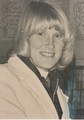
In the autumn of 1985, a 37-year-old woman named Shirley Jo Kelly disappeared from her life in Mattawan, Michigan, leaving behind a void of information and a family searching for answers. On October 19, 1985, she was reportedly last seen. Her husband at the time told authorities that he had dropped her off at Kalamazoo Valley Community College. From that point on, Shirley, a woman with blonde hair and blue eyes, was never heard from again. She was a resident of Mattawan at the time of her disappearance.
The circumstances surrounding Shirley Kelly's disappearance quickly led investigators to suspect foul play. However, despite these suspicions, few details about the investigation have been made public over the years. The case has been classified as an endangered missing person, a label that underscores the serious concerns for her welfare from the outset. The lack of concrete leads and the passage of time have made the search for answers increasingly difficult, leaving her family and the community with lingering questions about what happened to her.
Decades have passed since Shirley Kelly was last seen, and her case remains unresolved. The investigation is still officially open, with the Michigan State Police listed as the primary investigating agency. Information about her disappearance has been shared through various platforms for missing persons, hoping that someone might come forward with the key piece of information that could finally shed light on her whereabouts. The overview of Shirley Kelly's case is one of an abrupt and mysterious disappearance, a family left in limbo, and an investigation
hampered by a scarcity of evidence, a narrative that unfortunately continues without a conclusion.
Shirley Jo Kelly was a 37-year-old woman when she was last seen on October 19, 1985, in connection with Mattawan, Michigan, the Van Buren County community where she was living at the time. The last known account of her movements came from her husband, who later reported her missing. He told authorities that he had dropped Shirley off at Kalamazoo Valley Community College in Kalamazoo County. After that reported trip to the college, Shirley was never confirmed to have been seen or heard from again. What may have happened after she arrived there, whether she entered the campus, met another person or left the area by some other means has never been publicly established. Her disappearance became a lasting mystery because the known timeline ends almost immediately after her husband's account, leaving investigators and Shirley's loved ones with very little confirmed information from which to reconstruct her final movements.
The circumstances surrounding the reported drop-off remain especially important because publicly available case summaries do not identify an independent witness who saw Shirley at the college that day. Her husband's statement appears to be the central account of where she was supposed to have been when she disappeared, while official records also describe Mattawan as the place where she was last known to be alive. The distinction has left uncertainty about Shirley's precise last confirmed location. No publicly available description explains why she was going to the college, whether she was attending a class, meeting someone or taking care of personal business. There is also no public account of clothing, luggage, a vehicle or other possessions that might indicate whether she expected to be away briefly or had made preparations for a longer absence. The absence of those details has made it difficult to determine whether Shirley ever reached the campus or whether something happened before, during or after the reported journey from Mattawan into Kalamazoo County.
At the time she vanished, Shirley was described as a white woman approximately 5 feet 6 inches tall and weighing about 120 pounds. She had blond or strawberry-blond hair and blue eyes. No distinctive scars, marks or tattoos are included in the publicly available NamUs information, and no clothing description has been released in the case record. Those limitations are significant in a disappearance dating to 1985, when surveillance cameras, mobile telephones and electronic location records were not available to investigators in the way they are today. Without a confirmed sighting after the reported drop-off, investigators were left to rely on interviews, physical searches, personal records and any information supplied by people who knew Shirley. Despite the passage of decades, no publicly reported discovery of her belongings or remains has explained where she went or what happened to her.
Authorities have classified Shirley's disappearance as suspicious, and foul play is suspected, although the specific evidence supporting that conclusion has not been made public. No suspect or person of interest has been publicly named in the available case summaries, and there is no reported arrest or criminal charge connected to her disappearance. The limited public record does not describe any ransom demand, confirmed voluntary departure, medical emergency or documented communication from Shirley after October 19. It also does not provide details about searches, interviews or forensic evidence that may have been gathered during the original investigation. The scarcity of released information should not be mistaken for a lack of investigative concern; rather, it reflects a case in which investigators appear to have had few facts that could be safely confirmed or publicly disclosed. Shirley's file remains associated with the Michigan State Police, whose Paw Paw Post holds agency case number 51-2966-85.
As the investigation continued through the years, a DNA reference sample from Shirley's daughter was completed and entered for comparison through federal identification systems. Such family reference material can help authorities compare a missing person's biological relatives with unidentified remains recovered in Michigan or elsewhere in the country. The existence of that sample preserves an important path toward identification should relevant remains or biological evidence ever be located. Even so, no official report has announced a confirmed match, and the public case information contains no resolution stating that Shirley has been found. For her family, the long wait has meant living without knowing whether she was harmed near Mattawan, disappeared after reaching Kalamazoo County or was taken somewhere investigators have never been able to identify.
Shirley's story remains defined by one brief and disputedly incomplete final timeline: she was living in Mattawan, her husband said he drove her to Kalamazoo Valley Community College on October 19, 1985, and she then vanished without a confirmed trace. Every unanswered question begins with that account. It is unknown whether anyone else saw her that day, whether she actually entered the college, how she might have left or why no reliable communication from her was ever received afterward. In overview, Shirley Jo Kelly was a 37-year-old woman who disappeared from the Mattawan area under suspicious circumstances after a reported trip to a community college in Kalamazoo County. Foul play has long been suspected, but no publicly identified suspect has been charged, no confirmed evidence has revealed her destination and no discovery has brought a final answer to the people who have spent decades wondering what happened to her.
Last Seen: Oct 19, 1985