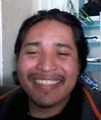
Duane Ryan Thomas was a 30-year-old Navajo man when he disappeared on March 4, 2011, with established missing-person records identifying Indian Wells, Arizona, as the place from which he went missing. Other later accounts place the events surrounding his disappearance near Red Mesa on the Navajo Nation, reflecting some variation in how the location has been described publicly. Duane was about 5 feet 10 inches tall and weighed approximately 185 pounds, with brown hair and brown eyes.
He wore his hair clean-cut and, around the time he vanished, had sideburns, a mustache and a goatee. He was also known by the nicknames Wayne and Waynnie. Beyond those identifying details, Duane was a son, father, brother and identical twin whose absence was immediately noticeable within a close family. Relatives described him as someone who routinely kept in touch with his mother, generally calling her once or twice every week. When those calls suddenly stopped after March 4, the silence was deeply out of character. His family eventually reported him missing later that month and began searching for him themselves, beginning what would become an extraordinarily long effort to learn what happened.
Accounts developed over the years have provided more context about Duane's final known hours. A 2025 program summary concerning his disappearance described Duane as living in the Newcomb, New Mexico, area and working with his family. According to that account, during the early morning hours of March 4 he and his girlfriend were returning from a dance when they stopped along the road near Red Mesa because Duane had become sick. He reportedly walked away into the surrounding desert and was not seen again. Earlier missing-person summaries contained far fewer details, stating primarily that he was last seen in the Indian Wells area and emphasizing the abrupt end of his regular telephone contact with his mother. His family also told case researchers that Duane had been experiencing relationship difficulties with his common-law wife before he vanished. Those circumstances became part of the family's questions about his disappearance, but public sources do not establish exactly what occurred after Duane left the roadside or who, if anyone, was with him throughout the final portion of that night. The uncertainty between the broad Indian Wells listing and later accounts centered on Red Mesa is important: the available information describes the same missing man and the same March 4 disappearance, but the precise sequence and location of his last confirmed movements have never been presented consistently across every public source.
For years, Duane's relatives carried much of the burden of keeping attention on his case. Later reporting portrayed him as a Western dancer and boilermaker who was remembered by his family for his spirituality, his enjoyment of dancing and the close bond he shared with his twin brother, Dorwin. His son, Jeremiah, grew up carrying memories of his father while the family continued seeking answers across the vast landscape of the Navajo Nation. In 2025, the Albuquerque Journal reported that the family's understanding of the case had expanded after information surfaced concerning another possible account of Duane's final movements. A woman reportedly told authorities that she had been with others around the time Duane disappeared and directed investigators toward a remote area reached by dirt roads near Red Mesa. According to information the family said was shared with them, she described seeing Duane walk away with two men. Investigators subsequently recovered human remains and a pair of cowboy boots from the area, and the remains were sent for forensic examination. The family said the information underlying that search was not entirely new to them; relatives maintained that a similar lead had existed for years and that they had previously tried to bring it to investigators' attention. Their frustration was compounded by the jurisdictional and resource problems that often affect investigations on the Navajo Nation. The Journal reported that the family had long suspected that something happened to Duane, while authorities had not developed sufficient evidence to classify the disappearance as a homicide. An FBI spokesman told the newspaper that federal involvement in an adult missing-person matter would require evidence establishing that a federal crime had occurred.
By 2025, after years of waiting for answers, Duane's relatives were physically returning to the Red Mesa landscape themselves. With assistance from Ray Kieyoani of the volunteer Dzil Yi Jiin Rescue group, family members searched rugged canyon and mesa terrain near the location associated with the newer investigative lead. They marked bones they encountered so trained investigators could examine them, moving through an environment where weather, wildlife and the passage of more than a decade had made any search extremely difficult. During repeated searches, family members found additional remains, including a human skull, which Navajo Nation Police later recovered for examination. The emotional weight of those searches was immense: Duane's mother had spent years hoping to see her son again before dying without receiving the answers she wanted, while his father, siblings, twin brother and son continued searching in her memory as well as their own. Duane's name was also among those represented during a June 2025 Navajo Nation event honoring missing and murdered Diné relatives, where families carried photographs and signs to preserve public awareness of their loved ones. His story is therefore more than a file number or a disappearance recorded on March 4, 2011. It is the story of a 30-year-old Navajo man whose familiar calls home abruptly stopped, of incomplete and sometimes differing accounts of his last movements between Indian Wells and the Red Mesa area, of a family that refused to allow the passing years to erase him, and of later searches that brought renewed attention to a remote landscape connected to the mystery. At its heart, the case of Duane Ryan Thomas is an enduring search for a beloved father, son, brother and twin whose disappearance left his family with decades of questions and whose story continues to be preserved through their determination to understand what happened to him.Last Seen: Mar 4, 2011